The Ultimate Guide to Scrub Sizes and Fit
2026-08-10 16:07:55
Introduction
Getting the right size in medical scrubs matters more than it does with everyday clothing. A poor fit doesn't just look wrong in the mirror it can genuinely restrict movement, cause discomfort across a long shift, and undermine even the highest-quality fabric. Yet scrub sizing remains one of the most common sources of frustration when buying online, largely because sizing isn't standardised across brands the way many people expect.
This guide covers exactly how to measure yourself correctly, how to read and compare size charts, common fit problems and how to solve them, and what to do when a brand's sizing doesn't match your expectations.
Why Scrub Sizing Is More Complicated Than It Seems
Unlike general fashion sizing, which has at least loose industry conventions, medical scrub sizing varies significantly between manufacturers. A medium in one brand can fit closer to a small in another, and even different styles within the same brand such as a classic fit versus a slim fit can carry noticeably different measurements under the same size label.
This inconsistency exists partly because scrub brands design around different priorities: some prioritise a closer, tailored fit, while others build in extra room for mobility or layering. Without a universal standard, the only reliable way to choose the right size is to measure yourself accurately and compare those measurements against each specific brand's size chart, rather than relying on your usual clothing size or a size you've worn from a different scrub brand.
How to Measure Yourself for Scrubs
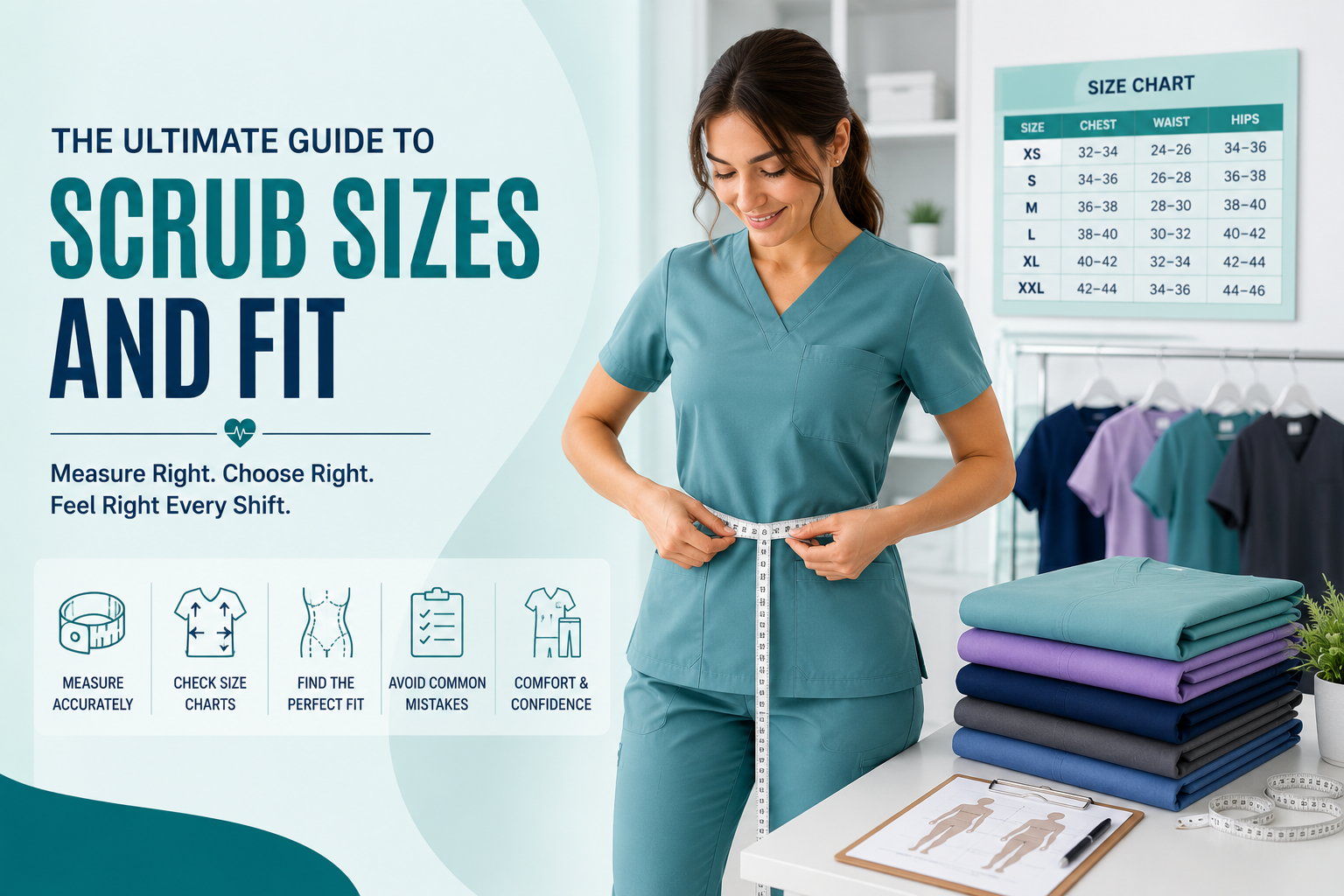
Taking accurate measurements is the single most important step in getting the right fit. It only takes a few minutes but prevents the vast majority of sizing issues.
What You'll Need
-
A flexible fabric measuring tape
-
A mirror, or someone to help you measure accurately
-
Well-fitted (not baggy) clothing to measure over, for accuracy
Chest Measurement
Wrap the measuring tape around the fullest part of your chest, keeping it level and snug but not tight. Take the measurement while breathing normally, not while holding your breath or expanding your chest.
Waist Measurement
Measure around your natural waistline, generally the narrowest part of your torso, just above the belly button. Keep the tape snug but not compressed.
Hip Measurement
Measure around the fullest part of your hips, keeping the tape level all the way around. This measurement matters particularly for trouser fit.
Inseam Measurement
Measure from the top of your inner thigh down to your ankle bone, ideally using a pair of well-fitted trousers as a reference if measuring directly on the body feels difficult to do accurately alone.
Height
Simply your standing height without shoes, which many brands use alongside other measurements to recommend regular, petite, or tall length options.
Reading and Comparing Size Charts
Once you have your measurements, the next step is comparing them against the specific brand's size chart rather than assuming your general clothing size will translate directly.
Always check the specific product's size chart, not just a brand's general sizing page, since different styles can vary in fit even within the same brand.
Compare your actual measurements, not your usual size label, since a size you wear in one brand may not match the same label in another.
Check for fit notes, such as "runs small" or "true to size," which many retailers include based on customer feedback, offering a useful reality check beyond the raw measurements.
Look for style-specific differences, since slim-fit, classic-fit, and relaxed-fit options within the same brand can have meaningfully different actual dimensions under the same labelled size.
Common Scrub Fit Problems and How to Solve Them
Tops That Pull Across the Chest or Shoulders
This usually indicates a size too small in the chest or shoulder measurement, regardless of how the waist or length fits. Sizing up, or looking for a style specifically designed with a broader shoulder cut, typically resolves this.
Trousers That Sit Too Low or Ride Up
This often points to an incorrect waist or hip measurement match, or a style with a shorter or lower-rise design than expected. Checking the specific product's rise measurement, when available, helps avoid this issue.
Excess Fabric Bunching at the Waist
Common in boxy, non-tailored styles or when sizing up unnecessarily to accommodate chest or hip measurements. Looking for styles with a more tailored waist, or brands offering separate top and trouser sizing, can solve this without needing to size up overall.
Sleeves or Trouser Legs That Are Too Long or Short
Many brands offer regular, petite, and tall length options specifically to address this. If a brand only offers one length, checking customer reviews for fit feedback relative to height can help predict whether adjustment will be needed.
Scrubs That Fit Well Initially but Loosen After Washing
This typically indicates fabric with limited recovery, often lower-quality stretch blends where the elastane content breaks down faster than expected. Choosing genuine performance fabric, and following correct washing temperatures, helps prevent this over time.
Scrubs That Shrink After the First Wash
Usually linked to fabric composition and washing temperature rather than sizing itself. Checking the care label before the first wash, and avoiding high heat, typically prevents unexpected shrinkage though some natural shrinkage is normal even with correct care, which is worth factoring into initial sizing decisions for cotton-heavy blends.
Sizing Differences Between Men's and Women's Scrubs
While both follow similar general measurement principles, men's and women's scrub sizing typically account for different body proportions by design.
Men's scrubs generally offer a broader shoulder cut and longer torso length as standard, with straight-leg or jogger trouser options built around typical male waist-to-hip proportions. For a full breakdown, see our men's scrub buying guide.
Women's scrubs typically include curved waist tailoring and a closer hip-to-waist ratio adjustment, often with petite and tall options more commonly available to account for a wider range of height variation. For more detail, see our women's scrub buying guide.
Some brands, including ScrubNext, also offer unisex or gender-neutral fits for those who prefer a style that doesn't follow traditional men's or women's tailoring conventions.
Petite, Tall, and Plus-Size Considerations
Standard sizing doesn't work equally well for everyone, and many scrub brands now offer additional options to address this.
Petite sizing typically shortens both torso and inseam length proportionally, rather than simply offering a smaller overall size, which better preserves fit through the shoulders and hips for shorter individuals.
Tall sizing extends torso and inseam length while maintaining the same chest, waist, and hip proportions as the standard size, addressing length without requiring a size up overall.
Extended and plus-size ranges are increasingly common across scrub brands, with many now offering sizing well beyond traditional small-to-extra-large ranges, along with proportionally adjusted fits rather than simply scaled-up versions of standard sizes.
If your measurements fall between standard categories, checking whether a brand offers these additional options before defaulting to a standard size that technically "fits" but doesn't account for your specific proportions is generally worth the extra step.
What to Do When Sizing Still Doesn't Feel Right
Even with accurate measurements, sizing can occasionally still feel off once you receive your order. A few practical steps help here.
Check the retailer's exchange policy before purchasing, particularly for first-time orders from a new brand, so sizing uncertainty doesn't become a costly mistake.
Order two adjacent sizes if you're between measurements, when a retailer's return policy makes this practical, keeping the better-fitting option and returning the other.
Read recent customer reviews specifically mentioning fit, since these often highlight sizing quirks that aren't obvious from the size chart alone.
Contact customer service with your specific measurements, particularly for borderline cases, since many retailers can offer more tailored guidance than a general size chart provides.
A Quick Sizing Checklist Before You Order
✔ Measure chest, waist, hips, and inseam accurately, ideally with help
✔ Compare measurements against the specific product's size chart, not a general brand chart
✔ Check for petite, tall, or extended sizing options if you fall outside standard proportions
✔ Read recent fit-specific reviews for the exact style you're considering
✔ Confirm the retailer's exchange or return policy before ordering
✔ Consider ordering a second size if you're between measurements and returns are straightforward
Simple Alterations Worth Considering
For an otherwise well-fitting scrub set with one specific fit issue, a simple alteration can sometimes be more practical than returning or replacing the entire garment.
Hemming trouser length One of the most common and straightforward alterations, useful when a brand doesn't offer petite or tall options and the standard length runs slightly too long or short.
Taking in a waistband Practical for trousers that fit well through the hip and thigh but sit slightly loose at the waist, particularly for styles without a fully elasticated waistband.
Adjusting sleeve length Less common for scrub tops, which are typically short-sleeved, but occasionally relevant for scrub jackets or long-sleeved base layers worn underneath.
Basic alterations are generally inexpensive and can extend the usability of a scrub set that's close to the right fit but not quite exact, particularly useful for petite or tall individuals when a brand's standard sizing doesn't fully account for their proportions.
Why ScrubNext Prioritises Consistent, Reliable Sizing
At ScrubNext, we understand that sizing frustration is one of the most common reasons healthcare professionals hesitate to order scrubs online. That's why our range is built around:
-
Detailed, style-specific size charts rather than one generic chart across all products
-
Consistent sizing across our full collection, so a size in one style matches closely to the same size in another
-
Fit-specific customer feedback included on product pages where available
-
A straightforward exchange process for sizing adjustments
Frequently Asked Questions
Why does scrub sizing vary so much between brands?
There's no universal industry sizing standard for medical scrubs, so each brand sets its own size charts based on its own design priorities, which is why measurements not size labels are the most reliable way to choose a size.
Should I size up if I'm between two sizes?
It depends on the style and your priorities. Sizing up generally offers more room for movement and layering, while sizing down often gives a more tailored appearance checking specific fit reviews for the style helps decide which trade-off suits you best.
Do scrubs shrink after washing?
Some shrinkage is normal, particularly with cotton-heavy fabric, even with correct care. Checking the care label and avoiding high heat during washing and drying helps minimise this.
What's the difference between petite, regular, and tall scrub sizing?
These options adjust torso and inseam length proportionally, rather than simply offering a smaller or larger overall size, helping the fit sit correctly through the shoulders and hips regardless of height.
How do I know if a specific scrub style runs small or large?
Checking recent customer reviews that specifically mention fit is usually the most reliable way to catch sizing quirks that aren't obvious from the size chart alone.
Final Thoughts
Scrub sizing doesn't follow a universal standard, which makes accurate self-measurement and careful comparison against specific size charts essential far more reliable than assuming your usual clothing size will translate directly. Taking the time to measure properly, check for petite, tall, or extended options where needed, and read fit-specific reviews before ordering significantly reduces the chance of a disappointing fit.
Getting sizing right isn't just about appearance it's the foundation that lets great fabric and design actually perform the way they're meant to across a full shift.
Browse ScrubNext's full size range and find scrubs built to fit properly from the first wear.