Men's Medical Scrubs UK: A Complete Style & Buying Guide
2026-08-11 10:29:12
Intoduction
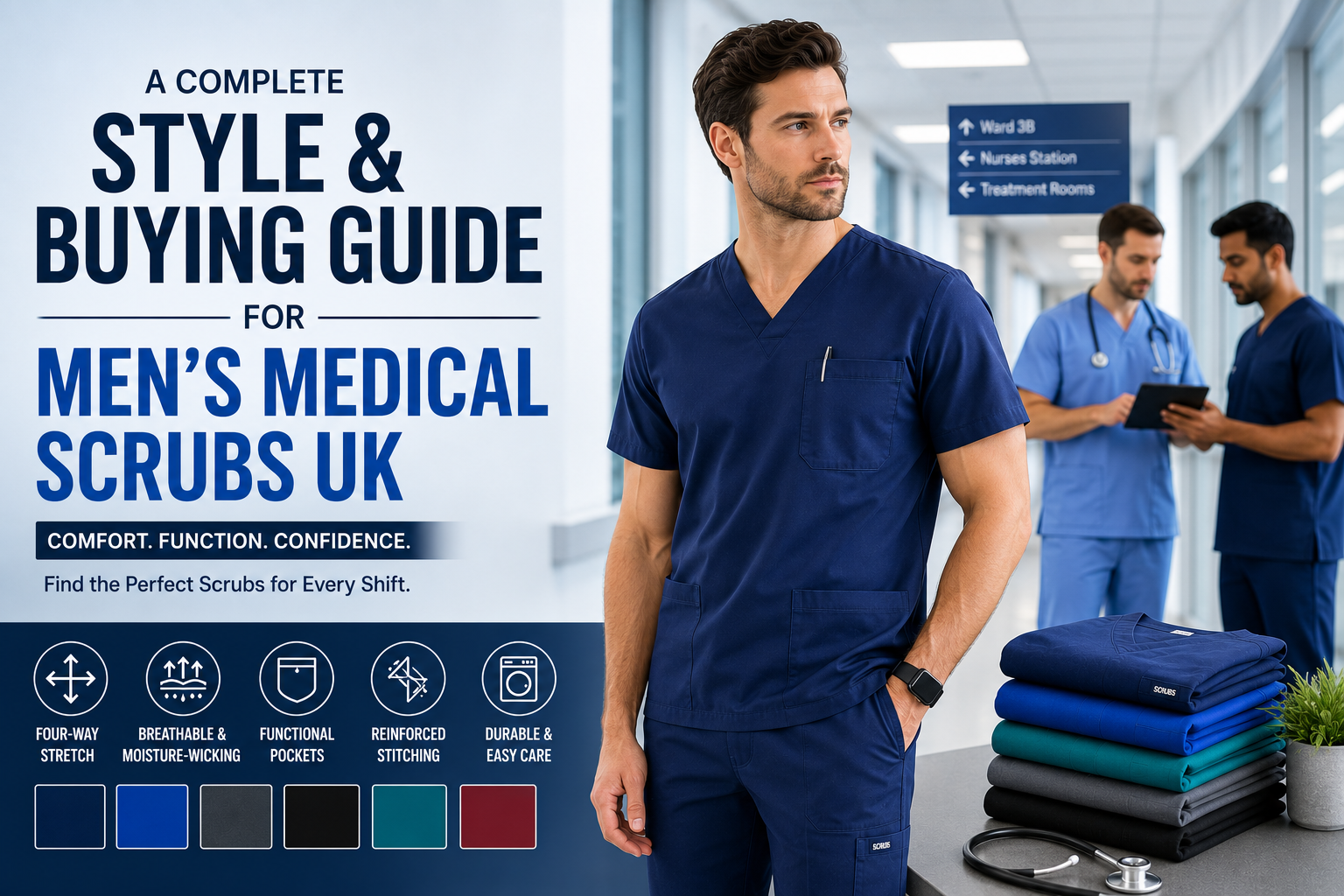
Men's medical scrubs have changed significantly over the past decade. What used to be a boxy, one size fits most uniform has evolved into a genuine category of workwear, with tailored fits, performance fabrics, and style options designed specifically around how men move and work in clinical environments.
Choosing the right men's scrubs isn't just about picking a colour and a size. Fit, fabric, and style all affect comfort and mobility across a long shift and getting these right can make a real difference to how you feel by the end of a 12 hour day. This guide covers everything worth knowing before you buy, from fit and fabric to sizing and style.
How Men's Medical Scrubs Have Evolved
Older generation scrubs were often designed as unisex, boxy garments that prioritised low manufacturing cost over comfort or fit. While functional, they tended to bunch up during movement, offered little in the way of tailoring, and rarely accounted for differences in body shape or shift demands.
Modern men's scrubs address this directly, with design features built specifically for a male fit including a broader shoulder cut, longer torso length, and trouser styles designed to sit comfortably at the waist without excess bulk. Combined with performance fabric, today's men's scrubs are closer to technical workwear than the basic uniforms of the past.
Key Features to Look for in Men's Scrubs
Fit Designed for a Man's Build
A properly fitted men's scrub top accounts for shoulder width and torso length, so it doesn't pull across the chest or ride up during movement. Trousers should sit comfortably at the waist with enough room through the hip and thigh for bending and walking, without being excessively loose.
Four Way Stretch Fabric
Whether you're on a busy ward, in theatre, or moving between departments, fabric that stretches in every direction makes reaching, bending, and fast movement far more comfortable. Look for fabric blends containing spandex or elastane rather than fabric marketed simply as "stretch" without specifying fibre content.
Breathable, Moisture Wicking Material
Long shifts and additional PPE layers can lead to overheating. Breathable fabric with moisture wicking technology helps regulate temperature and keeps you feeling fresher for longer, particularly during physically demanding roles.
Reinforced Stitching
Men's scrubs, particularly for physically active roles, benefit from reinforced seams at the shoulders, sides, and pockets areas that experience the most strain during frequent bending, lifting, and reaching.
Functional Pocket Layout
Look for a chest pocket, cargo pockets, a secure phone pocket, a pen holder, and an ID badge loop. Well placed pockets reduce the need to carry a separate bag and keep essential tools within easy reach throughout a shift.
Wrinkle and Fade Resistance
Since scrubs are typically washed after every shift, fabric that resists wrinkling and holds its colour over repeated washes keeps your uniform looking sharp for longer, without added ironing time.
Popular Men's Scrub Styles
Straight Leg Scrubs
The classic, traditional scrub trouser style straight through the leg with a relaxed, professional fit. This remains a popular choice across hospitals, clinics, and private healthcare settings, particularly for professionals who prefer a more conventional look.
Jogger Style Scrubs
Jogger scrub trousers feature an elasticated ankle cuff and a slightly more tailored fit through the leg, offering a modern, athletic appearance. This style has become especially popular among younger healthcare professionals, combining a contemporary look with practical, secure trouser length that won't drag or catch during movement.
Cargo Scrubs
Cargo style scrub trousers include additional pockets, typically positioned on the thigh, for carrying items like pens, medical scissors, gloves, or a notepad. This style suits professionals who need extra storage beyond what a standard scrub top provides.
Slim and Modern Fit Scrubs
For men who prefer a more tailored silhouette, slim fit scrub tops and trousers offer a closer cut without sacrificing the stretch and mobility needed for clinical work. This style has grown in popularity as scrub manufacturers move away from oversized, one size designs.
Relaxed Fit Scrubs
For those who prefer more room to move, a relaxed fit offers a looser cut through the body and legs while still maintaining a tailored, professional appearance rather than the shapeless fit of older scrub designs.
Choosing the Right Fabric
Fabric choice affects comfort, durability, and how well your scrubs hold up to frequent washing. The three main options are:
Cotton Breathable and soft, best suited to shorter shifts or roles with less physical demand, such as GP surgeries or clinics. Less durable and prone to wrinkling compared to synthetic blends.
Polyester Highly durable, wrinkle resistant, and quick drying, making it a practical choice for busy hospital environments with frequent washing schedules.
Stretch blends (polyester or cotton with spandex/elastane) The best option for active roles involving bending, lifting, or fast movement, since four way stretch fabric moves with the body rather than restricting it.
Many premium men's scrub ranges now use performance fabric, which combines breathability, durability, and stretch into a single material often the best all round choice for professionals working long or physically demanding shifts.
Popular Colours for Men's Medical Scrubs
Scrub colour requirements vary by employer, department, and healthcare setting, so it's important to check your workplace's uniform policy before ordering. Common colours for men's scrubs across UK healthcare include:
-
Navy blue the most widely worn colour, associated with professionalism and used broadly across nursing and clinical roles
-
Royal blue a slightly brighter alternative to navy, sometimes used in private healthcare settings
-
Ceil blue traditionally associated with surgical and theatre teams
-
Black increasingly popular in private healthcare for its modern, contemporary look and strong stain resistance
-
Charcoal grey a clean, professional option often chosen in physiotherapy and pharmacy settings
-
Olive green a less common but increasingly popular choice in some private clinics
-
Burgundy frequently used in dental and specialist clinic settings
If there's no strict colour policy at your workplace, navy blue remains the safest and most universally available option.
Men's Scrub Sizing Guide
Getting the right size matters as much as choosing the right style or fabric. A poorly fitted scrub, whether too tight or too loose, can restrict movement and affect how professional you look throughout a shift.
-
Measure your chest, waist, and inseam rather than relying on your usual clothing size, since scrub sizing conventions differ from standard menswear
-
Check the specific brand's size chart, as sizing can vary noticeably between manufacturers
-
Consider your body type some brands offer tall or athletic fit options for men who don't fit standard proportions
-
Think about layering if you wear a base layer underneath during colder months, factor this into your sizing decision
-
Prioritise room to move if your role involves frequent bending or lifting, err slightly looser rather than tighter, particularly through the shoulders and hips
-
Check trouser length options if available, since inseam length can vary significantly and affects both comfort and appearance
How Many Scrub Sets Should You Own?
Since scrubs are typically washed after every shift, most full time healthcare professionals benefit from owning three to five sets at minimum. This ensures a clean uniform is always available, even accounting for laundry schedules or unexpected shift changes. Professionals working irregular or back to back shifts may prefer five or more sets to avoid running short during a busy week.
Common Mistakes Men Make When Buying Scrubs
Sticking to unisex or oversized fits by default Many men still default to older, boxy unisex scrub styles out of habit, missing out on the comfort and mobility benefits of a properly tailored men's fit.
Ignoring fabric composition Not checking whether a "stretch" scrub actually contains spandex or elastane can lead to disappointment once the fabric doesn't perform as expected during active shifts.
Choosing style over practicality A slim, modern fit looks sharp, but if your role involves heavy lifting or fast movement, prioritising stretch fabric and functional pockets matters more than appearance alone.
Overlooking trouser length Buying a standard length without checking available options can result in trousers that drag on the floor or sit too short, both of which look unprofessional and can be a minor safety issue around equipment.
Underestimating how many sets are needed Buying only one or two sets often leads to more frequent, rushed washing, which shortens the overall lifespan of the fabric.
Why ScrubNext Is a Strong Choice for Men's Scrubs
At ScrubNext, our men's scrub range is built specifically around the demands of a real clinical shift, not just designed to look good on a hanger. Every set includes:
-
A tailored men's fit with broader shoulder and appropriate torso length
-
Four way stretch performance fabric
-
Breathable, moisture wicking material
-
Reinforced stitching at high stress points
-
Practical pocket layouts, including cargo and phone secure options
-
Straight leg, jogger, and slim fit style options
-
Consistent sizing across our full men's range
Whether you're a nurse, doctor, dentist, physiotherapist, or veterinary professional, ScrubNext's men's scrub collection is designed to support you through demanding shifts while looking sharp from the first hour to the last.
Completing the Look: Accessories for Men's Scrubs
A well chosen scrub set is only part of a complete, comfortable uniform. A few accessories can improve both comfort and practicality across a shift:
-
Comfortable medical footwear supportive, non slip shoes reduce fatigue during long periods of standing or walking
-
Compression socks help with circulation and reduce leg fatigue during 12 hour shifts
-
A base layer a moisture wicking undershirt adds warmth in colder wards without bulk, particularly useful in winter months
-
A scrub jacket useful for moving between temperature controlled departments or for extra warmth during breaks
-
An ID badge holder or lanyard pairs with a scrub top's badge loop for quick, secure identification
None of these are essential, but combined with a well fitted, quality scrub set, they round out a uniform built for comfort across a full working day.
Frequently Asked Questions
What is the best fit for men's medical scrubs?
A tailored fit designed specifically for a male body shape accounting for shoulder width and torso length generally offers the best combination of comfort, mobility, and professional appearance compared to older, boxy unisex designs.
Are jogger style scrubs appropriate for hospital wards?
This depends on your employer's uniform policy. Many UK hospitals now permit jogger style scrub trousers, but it's worth checking with your department before ordering, since policies vary between trusts and private healthcare settings.
What fabric is best for men working 12 hour shifts?
A stretch or performance fabric blend combining breathability, moisture wicking properties, and four way stretch tends to offer the most comfort and durability for long, physically active shifts.
How should men's scrub trousers fit?
They should sit comfortably at the waist with enough room through the hip and thigh for bending and walking, without excess bulk or fabric that drags on the floor.
How many sets of scrubs should a full time male nurse own?
Most full time professionals benefit from three to five sets, ensuring a clean uniform is always available between shifts and laundry days.
What colour scrubs do men typically wear in the NHS?
Navy blue is the most common colour for male nursing and clinical staff, though this varies by trust and department, so it's important to confirm your specific employer's dress code.
Final Thoughts
Men's medical scrubs have moved well beyond the basic, one size fits most uniforms of the past. Today's options offer genuine tailoring, performance fabric, and style choices that support comfort and mobility through demanding shifts, without compromising a professional appearance.
Choosing the right fit, fabric, and style based on your specific role and shift pattern makes a real difference to how you feel and perform throughout the day not just how your uniform looks in the mirror.
Shop ScrubNext's men's scrub collection and find the fit, fabric, and style built for your shift.