Jogger Scrubs vs Classic Scrubs: Which Should You Choose?
2026-08-17 12:03:18
Introduction
Scrub trouser styles have expanded well beyond the traditional straight-leg cut in recent years, and jogger-style scrubs have become one of the most popular alternatives across UK healthcare. But popularity doesn't automatically mean jogger scrubs are the right choice for every role or every shift. This guide compares jogger and classic scrubs directly, so you can choose based on how you actually work, not just current style trends.
What Are Classic Scrubs?
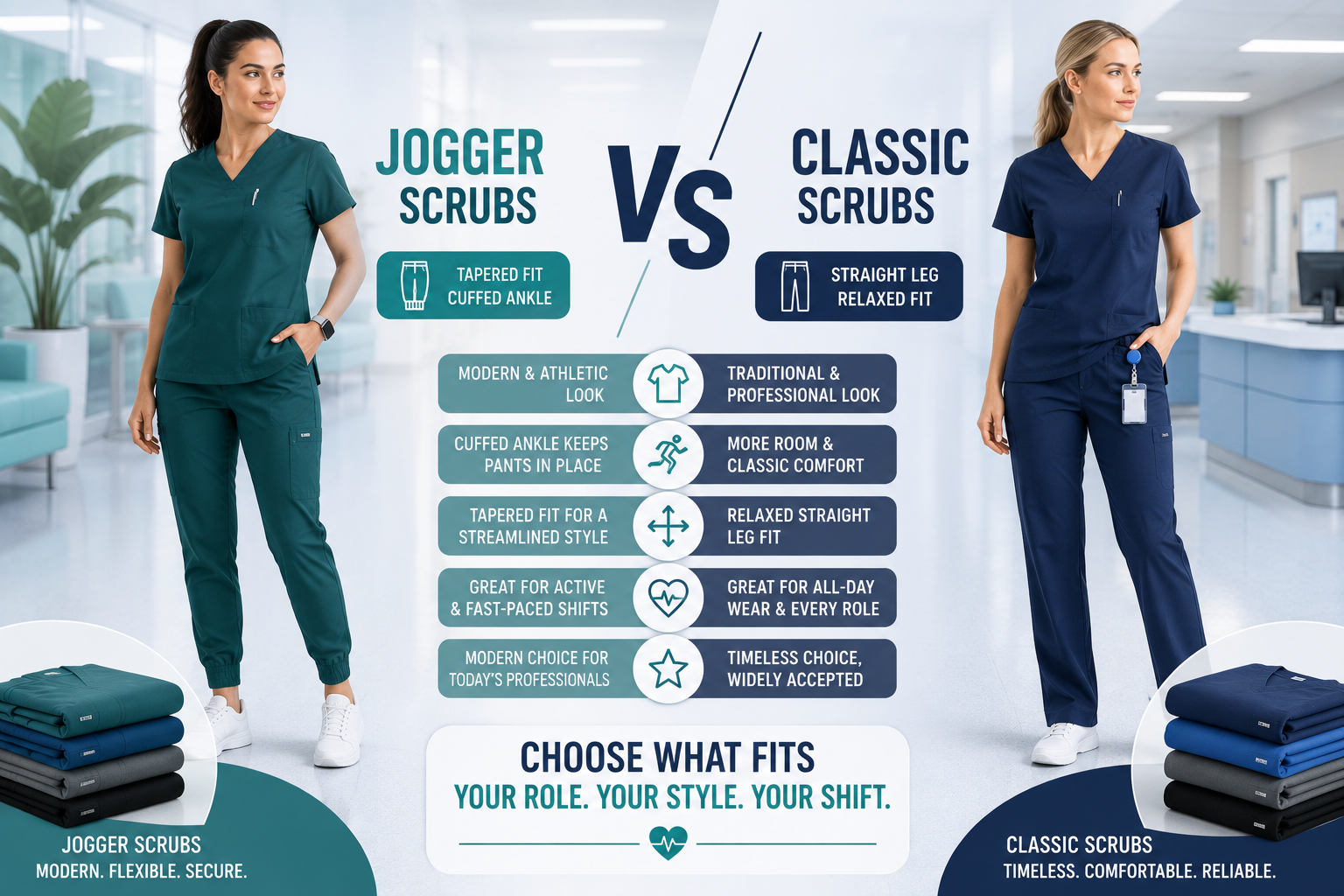
Classic scrub trousers follow the traditional straight-leg design that's been standard in healthcare workwear for decades. They typically feature a relaxed, straight cut through the leg, a simple elasticated or drawstring waistband, and a hem that sits at the ankle without any cuffing or tapering.
This style has remained popular precisely because of its simplicity and universal acceptance classic scrubs work across nearly every healthcare setting without raising questions about uniform policy compliance, and the loose, straight fit accommodates a wide range of body types comfortably.
What Are Jogger Scrubs?
Jogger-style scrub trousers borrow design details from athletic joggers, featuring an elasticated or ribbed cuff at the ankle, a slightly tapered leg, and often a more fitted silhouette through the hip and thigh compared to classic styles. Some jogger scrubs also include additional design details like drawstring waistbands or side seam detailing that further distinguish them from traditional scrub trousers.
This style has grown significantly in popularity over the past several years, particularly among younger healthcare professionals, as scrub design overall has moved toward more contemporary, athletic-inspired workwear.
Comfort and Mobility Comparison
Classic Scrubs
The loose, straight cut of classic scrubs offers plenty of room for movement without any fabric tension around the ankle or lower leg. This makes them a comfortable, low-maintenance option for most physical tasks, though the looser hem can occasionally catch on equipment or require rolling up during particularly active or fast-paced work.
Jogger Scrubs
The tapered leg and elasticated cuff keep fabric secure and out of the way during movement, which many professionals find genuinely useful during fast-paced or physically active shifts, particularly roles involving frequent bending, crouching, or quick movement between tasks. The trade-off is a closer fit through the leg, which some professionals find slightly less roomy than a classic straight-leg cut, particularly during extended sitting.
For highly active roles like emergency care, physiotherapy, or general nursing on busy wards, the secured ankle cuff of jogger scrubs is often cited as a genuine practical advantage, reducing the risk of loose fabric catching on equipment or trailing on the floor.
For roles involving more standing or less dynamic movement, such as pharmacy or administrative clinical work, the difference in practical mobility between the two styles tends to matter less, making the choice more about personal comfort preference and appearance.
Style and Appearance
Jogger scrubs offer a noticeably more modern, athletic appearance, which many healthcare professionals particularly younger staff prefer for both comfort and contemporary style. The tapered cut and secured cuff give a neater, more streamlined look compared to the sometimes looser, boxier appearance of classic straight-leg trousers.
Classic scrubs, by comparison, offer a more traditional, universally recognised healthcare uniform appearance. For professionals who prefer a conventional look, or work in settings where a more traditional uniform aesthetic is expected or preferred, classic scrubs remain a straightforward, professional choice.
Neither style is inherently more professional than the other in most modern healthcare settings, but personal and workplace preference genuinely does vary, making this largely a matter of individual and departmental taste rather than a fixed rule.
Workplace Policy Considerations
This is one of the most important practical factors in choosing between the two styles, and it's worth checking before ordering rather than after.
Some NHS trusts and private healthcare employers have specific uniform policies that may not yet formally include jogger-style scrubs, particularly in more traditional or long-established departments. While many trusts have updated policies in recent years to accommodate modern scrub styles, this isn't universal.
Other employers have no specific restriction, treating trouser style as a matter of personal choice as long as the required colour and general uniform standard are met.
Before ordering jogger scrubs for a new role, it's worth confirming directly with your department or HR team whether the style is explicitly permitted, rather than assuming based on general trends or what colleagues at a different trust or employer might wear. For more detail on how NHS uniform policy generally works, see our NHS scrubs uniform guide.
Fabric and Fit Considerations for Each Style
Jogger scrubs generally rely more heavily on stretch fabric to maintain comfort despite the closer, tapered fit, so checking for genuine four-way stretch fabric matters more with this style than with a looser classic cut. A jogger scrub made from fabric without adequate stretch can feel noticeably more restrictive than a classic style in the same fabric, simply due to the closer overall fit.
Classic scrubs are somewhat more forgiving of fabric choice, since the looser cut doesn't rely as heavily on stretch to maintain comfort, though performance fabric still improves overall comfort and durability regardless of trouser style. For a full breakdown of fabric options, see our scrub fabric comparison guide.
Practical Pros and Cons at a Glance
|
Factor |
Classic Scrubs |
Jogger Scrubs |
|
Mobility |
Roomy, unrestricted |
Secure, tapered, less loose fabric |
|
Style |
Traditional, universally accepted |
Modern, athletic-inspired |
|
Workplace policy risk |
Low almost universally accepted |
Worth confirming with employer first |
|
Fabric dependency |
Performs well in most fabrics |
Best with genuine stretch fabric |
|
Best suited to |
Most roles, especially standing/seated work |
Highly active, fast-paced roles |
|
Ankle/hem practicality |
Can catch on equipment if too long |
Secured cuff avoids catching or trailing |
Which Should You Choose? A Quick Decision Guide
Choose classic scrubs if:
-
Your workplace has a traditional or unconfirmed uniform policy around trouser style
-
You prefer a roomier, more relaxed fit
-
Your role involves more standing or seated work than fast, dynamic movement
-
You want a style guaranteed to be accepted across virtually any healthcare setting
Choose jogger scrubs if:
-
Your employer has explicitly confirmed jogger-style scrubs are permitted
-
Your role involves frequent bending, crouching, or fast-paced movement
-
You prefer a more modern, tailored appearance
-
You're comfortable prioritising genuine stretch fabric to maintain comfort in the closer fit
Durability and Care: Any Differences Between the Styles?
Fabric quality tends to matter more for long-term durability than trouser style itself, but a few style-specific factors are worth knowing.
Jogger scrubs have an elasticated ankle cuff, which is an additional stress point compared to classic styles. Over time and repeated washing, this cuff can lose elasticity, similar to a waistband, so checking cuff quality and following correct washing temperatures helps extend its lifespan.
Classic scrubs have fewer elasticated components overall, generally limited to the waistband, which can make them marginally simpler to maintain over a long lifespan, though this difference is usually minor compared to the impact of overall fabric quality.
In both cases, fabric composition and washing care matter significantly more to overall garment lifespan than the choice between classic and jogger styles alone. For a full breakdown of extending scrub lifespan regardless of style, see our guide on how often to replace your medical scrubs.
Can You Mix Styles?
There's no rule requiring you to choose one style exclusively. Many healthcare professionals keep a mix of both classic and jogger scrubs in rotation, choosing based on the specific demands of a shift, personal comfort preference on a given day, or simply to extend the overall lifespan of their uniform rotation by not relying on a single style worn repeatedly.
This approach also provides useful flexibility if you're uncertain which style you'll prefer long-term starting with one or two jogger sets alongside your existing classic scrubs lets you compare comfort and practicality directly during real shifts, rather than committing fully to one style based on appearance alone.
Why ScrubNext Offers Both Styles
At ScrubNext, we recognise that the right trouser style depends on the individual, the role, and the workplace, which is why our range includes both classic and jogger options, built to the same quality standard:
-
Genuine four-way stretch performance fabric across both styles
-
Reinforced stitching and durable waistbands regardless of cut
-
Consistent sizing between classic and jogger options within the same range
-
Both styles available across our full colour range
Whichever style suits your role best, both are built with the same comfort and durability priorities that define ScrubNext scrubs overall.
Frequently Asked Questions
Are Jogger Scrubs Allowed in NHS Hospitals?
This varies by NHS trust and workplace policy. Many UK hospitals now permit jogger-style scrubs, but this is not universal. It's best to confirm your specific department's uniform policy or check with your HR or management team before purchasing.
Are Jogger Scrubs More Comfortable Than Classic Scrubs?
It depends on your role and personal preference. Jogger scrubs often feel more secure and practical during fast-paced, physically active work, while classic scrubs provide a roomier, more relaxed fit that some healthcare professionals prefer, particularly in less physically demanding roles.
Do Jogger Scrubs Require Different Fabric Than Classic Scrubs?
Not necessarily. However, jogger scrubs generally benefit from genuine four-way stretch fabric because their closer, tapered fit depends more on fabric flexibility. Stretch fabric allows greater freedom of movement while helping the trousers remain comfortable throughout a busy shift.
Can I Wear Jogger Scrub Trousers With Any Scrub Top?
Yes. Jogger-style scrub trousers can generally be paired with a wide range of scrub tops. The main difference between jogger and classic scrubs is the trouser design, particularly the tapered leg and ankle cuff, rather than the style of the top.
Which Style Is Better for Nurses on Busy Wards?
Many nurses working on fast-paced, physically active wards prefer jogger scrubs because the tapered fit and secured ankle cuff can provide a practical, streamlined feel. However, classic scrubs remain a comfortable and functional option. The best choice ultimately depends on personal preference and your workplace's uniform policy.
Final Thoughts
Neither jogger nor classic scrubs are universally "better" the right choice depends on your role's physical demands, your personal comfort preference, and, importantly, your specific workplace's uniform policy. Classic scrubs remain a safe, comfortable, and universally accepted choice, while jogger scrubs offer a modern, practical alternative particularly suited to active, fast-paced roles, provided your employer confirms the style is permitted.
For many healthcare professionals, keeping both styles in rotation offers the best of both worlds, adapting to the specific demands of each shift rather than committing to just one.
Browse ScrubNext's classic and jogger scrub collections and find the trouser style that fits your role and shift.