How to Wash and Care for Medical Scrubs Properly
2026-08-17 12:09:08
Introduction
Medical scrubs go through more washing than almost any other type of clothing, often laundered after every single shift to meet hygiene standards. That frequency makes correct washing and care genuinely important not just for keeping scrubs clean, but for protecting fabric, colour, and stretch over the uniform's full lifespan. Get it wrong consistently, and even premium scrubs can fade, shrink, or lose shape far sooner than they should.
This guide covers exactly how to wash, dry, and store medical scrubs correctly, along with the most common care mistakes that shorten a uniform's usable life.
Why Scrub Care Matters More Than Regular Clothing Care
Most clothing is washed once a week or less, using whatever settings feel convenient. Medical scrubs are typically washed after every shift, sometimes multiple times a week, and often at higher temperatures to meet hygiene and infection control expectations. This combination of frequency and heat puts far more cumulative strain on fabric than standard laundry habits ever would.
Getting the washing routine right doesn't just keep scrubs hygienic it directly extends how long the fabric holds its colour, shape, and stretch, which matters both for comfort and for how often you need to replace your uniform.
Washing Medical Scrubs Correctly
Wash After Every Shift
Medical scrubs should be washed after each use to support hygiene standards expected in clinical environments. This is a non-negotiable baseline for most healthcare roles, regardless of fabric type or care preferences.
Wash Separately from Personal Clothing
Where possible, wash scrubs separately from everyday clothing to reduce the risk of cross-contamination. Many healthcare professionals keep a dedicated laundry basket or bag specifically for uniforms to make this separation straightforward and consistent.
Follow the Care Label's Temperature Guidance
Always check the specific care label rather than defaulting to the hottest available setting. While some hygiene guidance recommends higher wash temperatures, excessive heat beyond what the fabric is designed for accelerates breakdown of stretch fibres, fading, and shrinkage particularly for performance and stretch-blend fabrics.
Avoid Overloading the Washing Machine
Packing too many garments into a single wash reduces how effectively water and detergent can circulate, both lowering cleaning effectiveness and increasing fabric wear from friction between garments. Washing in smaller, well-spaced loads generally produces better results for both hygiene and fabric longevity.
Use the Right Detergent
Standard detergent is generally suitable for most scrub fabrics, but harsh detergents with strong bleaching agents can accelerate colour fading, particularly on darker colours like navy and black. A gentler detergent, used consistently, tends to preserve colour and fabric integrity better over repeated washes.
Turn Scrubs Inside Out Before Washing
This simple step reduces friction and fading on the outer, visible surface of the fabric during the wash cycle, helping colour stay more vibrant for longer, particularly for darker or printed scrubs.
Drying Medical Scrubs Correctly
Air Dry When Possible
Air drying is generally the gentlest option for preserving fabric stretch, colour vibrancy, and elastic waistbands. This is particularly important for performance and stretch-blend fabrics, since elastane fibres are more sensitive to heat than standard cotton or polyester.
Use a Low-Heat Tumble Setting If Needed
When air drying isn't practical, a low-heat tumble setting is generally a reasonable alternative, though it should be used consistently rather than switching between high and low heat, which can cause uneven wear over time.
Avoid High Heat Drying
High heat is one of the fastest ways to shrink fabric, break down elastane fibres, and fade colour. While it may seem like a time-saving option, the cumulative damage to fabric quality often means scrubs need replacing sooner, effectively costing more in the long run.
Remove Scrubs Promptly After Drying
Leaving scrubs sitting in a dryer after the cycle ends increases wrinkling, which can mean more ironing time later. Removing and folding or hanging scrubs promptly helps maintain a neater appearance with less additional effort.
Storing Scrubs Properly
Fold or Hang in a Clean, Dry Space
Proper storage after washing helps reduce wrinkles and keeps scrubs ready for the next shift without last-minute ironing. A dedicated space for clean uniforms, separate from other clothing, also helps maintain the hygiene benefits of washing separately in the first place.
Keep Clean and Worn Scrubs Separate
Avoid storing freshly laundered scrubs in the same space as worn uniforms awaiting washing, since this can undermine the hygiene benefit of the wash cycle itself. A simple two-basket or two-bag system one for clean, one for worn keeps this separation straightforward.
Avoid Prolonged Storage in Damp Conditions
Scrubs left damp or stored in poorly ventilated spaces can develop odour or, in some cases, mildew, even after a proper wash. Ensuring scrubs are fully dry before storing helps avoid this entirely.
Common Scrub Washing Mistakes to Avoid
Washing at excessively high temperatures by default While hygiene matters, consistently exceeding the fabric's recommended temperature accelerates wear without necessarily improving cleanliness beyond what the correct temperature already achieves.
Using strong bleach on coloured scrubs This often causes uneven fading rather than a clean, uniform lighter shade, leading to a patchy, worn appearance far sooner than expected.
Ignoring the care label entirely Many healthcare professionals wash scrubs the same way regardless of fabric type, missing fabric-specific guidance that can meaningfully extend garment life.
Overloading the washing machine to save time This reduces both cleaning effectiveness and fabric longevity, making it a false economy in terms of time saved.
Tumble drying on high heat as a default setting One of the most common and most damaging habits, particularly for stretch and performance fabric blends.
Leaving scrubs damp for extended periods Whether in a laundry basket or after washing, prolonged dampness can lead to odour retention and, in some cases, fabric damage.
Care Guidance by Fabric Type
Different fabrics respond differently to washing and drying, so adjusting your routine based on fabric composition helps protect garment life more effectively than a single, one-size-fits-all approach.
|
Fabric Type |
Recommended Wash Temp |
Drying Recommendation |
|
Cotton |
Cool to warm |
Air dry preferred; low heat if needed |
|
Polyester |
Warm |
Low to medium heat; dries quickly |
|
Polyester-Spandex Blend |
Cool to warm |
Air dry preferred to protect elastane |
|
Performance Fabric |
Follow specific care label |
Air dry or low heat, per label guidance |
For a deeper look at how these fabric types perform generally, see our scrub fabric comparison guide.
How Proper Care Extends Scrub Lifespan
Consistent, correct washing and drying can meaningfully extend how long a scrub set stays in good condition, particularly for premium and performance fabric blends designed to hold up to frequent laundering. Poor care habits, on the other hand, can shorten even high-quality fabric's lifespan significantly, sometimes to the point where budget and premium scrubs end up wearing out at a similar rate simply due to washing damage rather than fabric quality itself.
For a full breakdown of how fabric quality and care combine to affect overall garment lifespan, see our guide on how often to replace your medical scrubs.
Dealing with Stains Without Damaging Fabric
Clinical work occasionally means dealing with stains, and treating them correctly protects both hygiene and fabric quality.
Treat stains as soon as possible The longer a stain sits, particularly protein-based ones, the harder it becomes to remove without aggressive treatment that can damage fabric.
Avoid rubbing vigorously This can push a stain deeper into the fibres and cause pilling, particularly on performance fabric blends. Gently blotting is generally more effective and less damaging.
Use cold water for protein-based stains Hot water can set certain stains rather than lift them, so cold water is often more effective as a first step before the full wash cycle.
Check colourfastness before spot-treating Testing a stain remover on a small, hidden area first helps avoid unexpected fading or discolouration on visible parts of the garment.
Avoid excessive bleach use, even on white or light scrubs While tempting for stubborn stains, frequent bleach use accelerates fabric breakdown over time, often shortening the garment's overall lifespan more than the occasional stain would justify.
A Quick Scrub Care Checklist
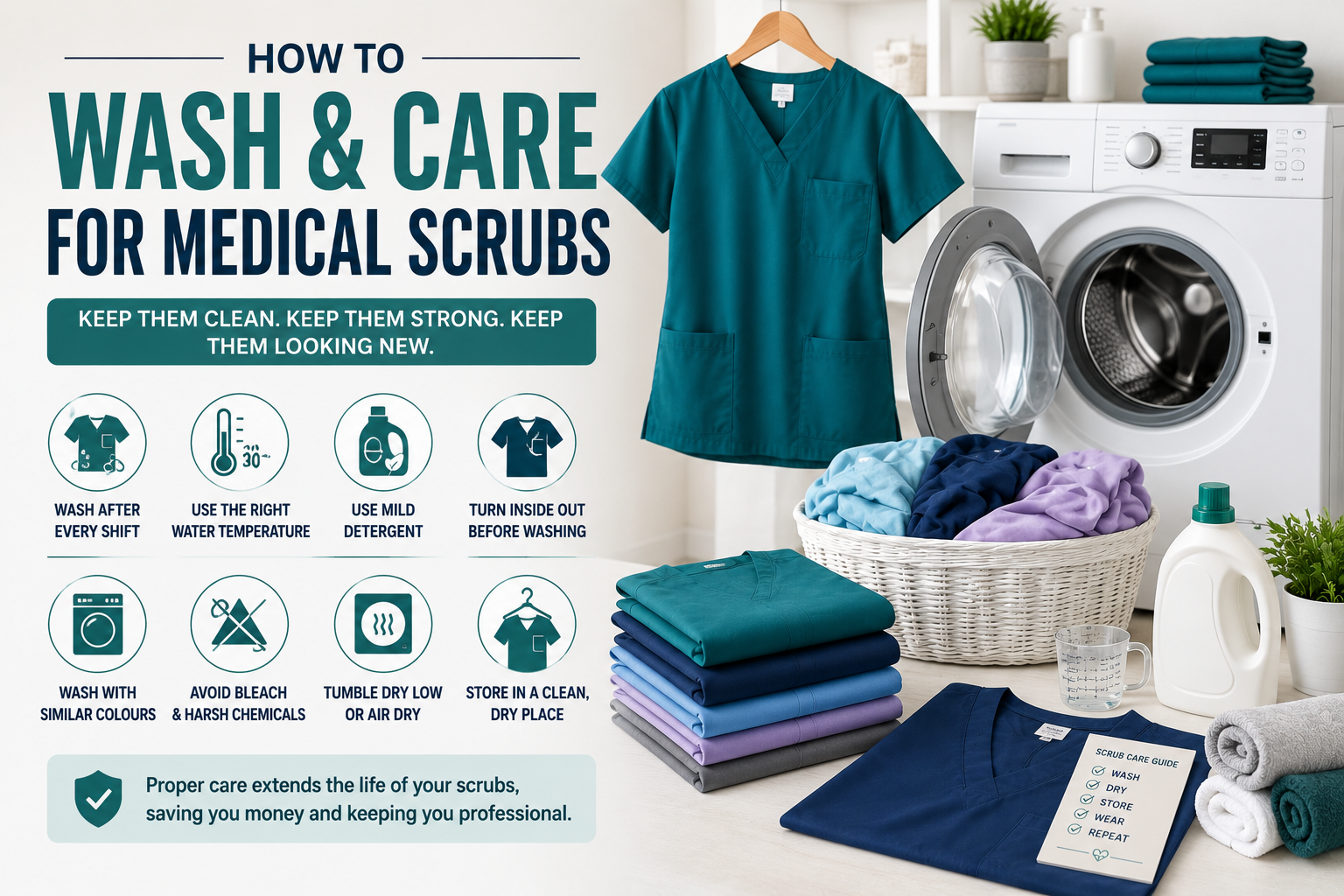
✔ Wash after every shift, separately from personal clothing
✔ Follow the specific care label rather than defaulting to high heat
✔ Avoid overloading the washing machine
✔ Turn scrubs inside out before washing to protect colour
✔ Air dry when possible; use low heat if tumble drying is necessary
✔ Remove promptly after drying to reduce wrinkling
✔ Store clean scrubs separately from worn uniforms, in a dry space
Why Fabric Quality Still Matters, Even With Perfect Care
While correct washing and care meaningfully extends any scrub's lifespan, fabric quality remains the foundation. Premium, performance-grade fabric is specifically engineered to withstand frequent washing better than budget alternatives, meaning even identical care routines will produce noticeably different results depending on the underlying fabric quality. Proper care and quality fabric work together neither fully compensates for the absence of the other.
Why ScrubNext Scrubs Are Built to Handle Frequent Washing
At ScrubNext, our scrubs are designed with the reality of frequent, demanding laundry routines in mind:
-
Fade-resistant fabric that holds colour through repeated washing
-
Shrink-resistant construction that maintains fit over time
-
Genuine performance fabric with strong stretch recovery, even under regular wash cycles
-
Reinforced stitching that withstands the friction of frequent laundering
Frequently Asked Questions
How Often Should Medical Scrubs Be Washed?
Medical scrubs should generally be washed after every shift. Regular washing helps maintain hygiene in clinical environments and reduces the risk of carrying contaminants between patients, work areas, and home.
What Temperature Should I Wash My Scrubs At?
Always check the care label for the specific fabric, as washing recommendations can vary. Performance and stretch-blend fabrics generally benefit from cooler wash temperatures, while standard polyester may tolerate warmer settings. Following the manufacturer's instructions is the safest approach.
Can I Tumble Dry Medical Scrubs?
Yes, but a low-heat setting is recommended where possible. Excessive heat can accelerate fabric breakdown, shrinkage, and fading, particularly in scrubs made with stretch or performance fabrics. Air drying is often a gentler alternative.
Why Do My Scrubs Lose Their Stretch Over Time?
Frequent exposure to high heat during washing or drying can cause elastane fibres to deteriorate more quickly, reducing the fabric's stretch and recovery. Using cooler wash temperatures and air drying can help preserve the fabric's flexibility for longer.
Should Scrubs Be Washed Separately From Other Clothing?
Yes, where possible. Washing work scrubs separately can help reduce the risk of transferring contaminants to other clothing and supports the hygiene practices expected in healthcare environments. Always follow your workplace's specific laundering guidelines where applicable.
Final Thoughts
Correct washing and care isn't just a hygiene requirement it's one of the simplest ways to protect the comfort, appearance, and lifespan of your medical scrubs. Following the specific care label, avoiding excessive heat, and storing scrubs properly all contribute to a uniform that performs well for longer, regardless of how demanding your washing schedule is.
Paired with genuinely durable, high-quality fabric, proper care habits make the biggest difference in how long your scrubs stay comfortable, professional, and ready for every shift.
Explore ScrubNext's durable, easy-care scrub collection and spend less time worrying about wear and tear.