How Often Should You Replace Your Medical Scrubs?
2026-08-11 10:18:09
Introduction
Medical scrubs go through more wear than almost any other type of workwear. Washed after nearly every shift and worn through physically demanding days, it's no surprise that scrubs eventually need replacing but many healthcare professionals aren't entirely sure when that point actually arrives. Wearing scrubs past their useful life can affect comfort, professional appearance, and even hygiene standards, while replacing them too early wastes money on uniforms that still had plenty of wear left.
This guide covers how long scrubs typically last, the clearest signs it's time for a replacement, and how fabric quality affects the entire replacement timeline.
Why Scrub Lifespan Varies So Much
Unlike everyday clothing, medical scrubs are washed extremely frequently, often after every single shift, and are worn through physically demanding activity involving bending, lifting, and fast movement. This combination of frequent washing and high physical use means scrubs wear out considerably faster than typical workwear but exactly how fast depends heavily on a few key factors.
Fabric quality Premium performance fabric holds up to repeated washing and physical strain significantly longer than budget cotton or basic polyester.
Washing frequency and method Scrubs washed after every shift at high temperatures wear out faster than those laundered less frequently or at gentler settings, though frequent washing is usually a non-negotiable hygiene requirement.
Physical demands of the role Roles involving heavy bending, lifting, or fast movement put more strain on fabric and seams than lower-mobility roles, accelerating wear.
Number of sets in rotation Professionals who rotate between five or more sets typically see each individual set last longer, since the wear is distributed more evenly across multiple uniforms rather than concentrated on one or two sets.
Because of these variables, there's no single fixed answer to "how long do scrubs last" but understanding the typical ranges and warning signs makes the decision much easier.
Typical Scrub Lifespan by Fabric Type
While individual results vary, general fabric quality provides a useful starting point for expectations.
|
Fabric Type |
Typical Lifespan (Regular Full-Time Wear) |
|
Budget Cotton or Basic Polyester |
3–6 months |
|
Standard Polyester Blend |
6–12 months |
|
Polyester-Spandex Stretch Blend |
12–18 months |
|
Premium Performance Fabric |
18–24+ months |
These figures assume regular full-time wear with washing after most shifts. Part-time roles, roles with lower physical demands, or professionals rotating through more than five sets often see individual scrubs last noticeably longer than these general ranges.
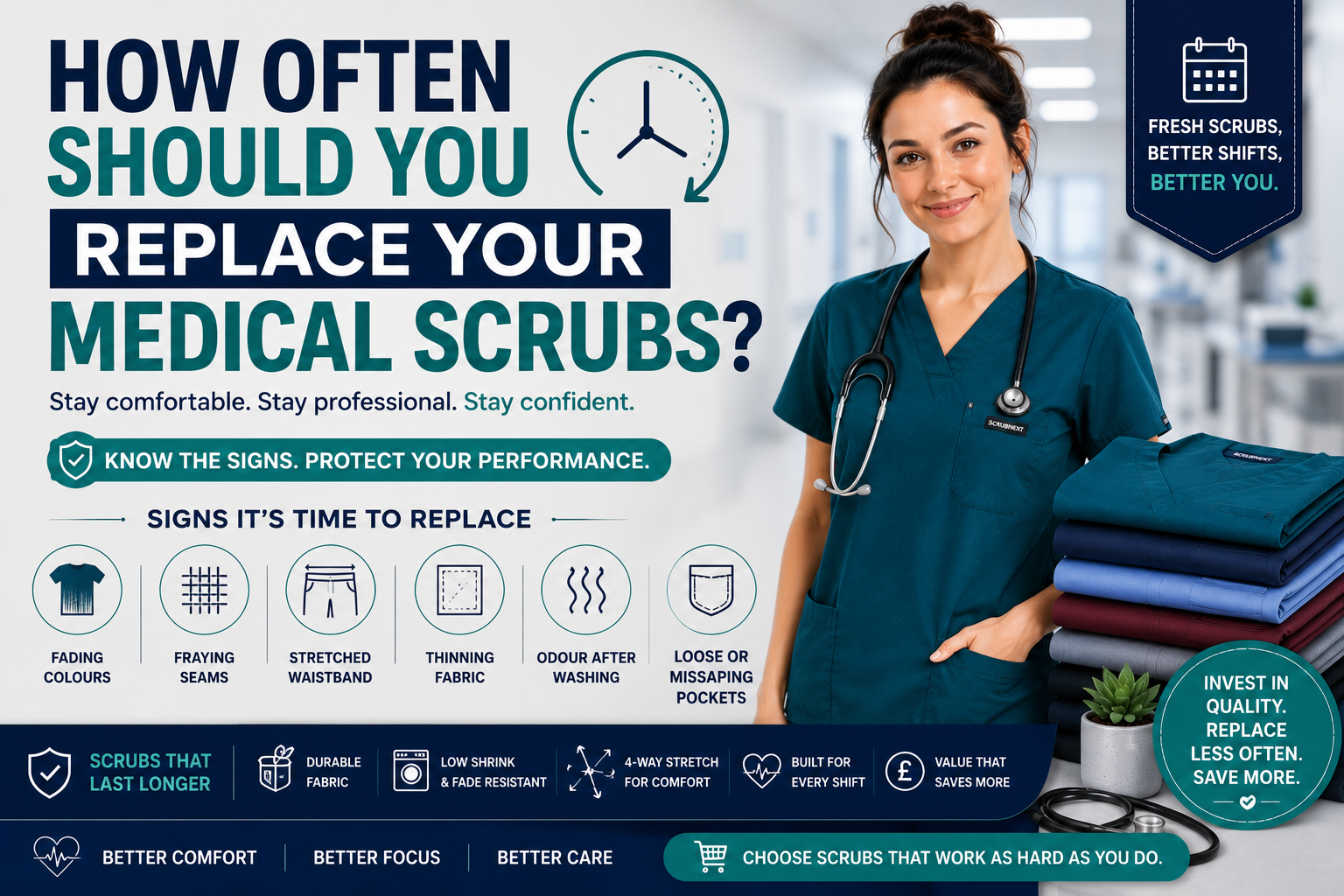
Clear Signs It's Time to Replace Your Scrubs
Rather than relying purely on a fixed timeline, it's often more accurate to watch for specific physical signs that a scrub set has reached the end of its useful life.
Fading or Uneven Colour
Frequent washing gradually fades fabric dye, and lower-quality scrubs often fade unevenly, creating a patchy, worn-out appearance rather than a uniform lighter shade. Once fading becomes noticeable, particularly around high-friction areas like the waistband or pocket edges, it's usually a sign the fabric is deteriorating more broadly, not just visually.
Thinning or Sheer Fabric
Over time, repeated washing breaks down fabric fibres, leading to thinner material that may become slightly see-through, particularly in lighter colours. This is both a comfort and professionalism issue and generally signals the fabric has lost much of its original durability.
Stretched-Out or Loose Waistbands
Elastic waistbands lose their elasticity over time, especially with frequent high-heat washing. A waistband that no longer sits securely, or that requires constant adjustment, is one of the clearest and most common signs a scrub set needs replacing.
Fraying Seams or Loose Stitching
Even reinforced stitching eventually wears down under repeated stress and washing. Fraying at the shoulders, sides, or pocket openings is a strong indicator that the garment's structural integrity is starting to fail, and small tears often follow soon after if left unaddressed.
Reduced Stretch or Recovery
Stretch fabric containing spandex or elastane gradually loses its recovery ability over time, meaning the fabric stretches out during wear but doesn't fully return to its original shape. Scrubs that feel looser than they used to, despite no change in body size, often indicate this kind of fabric fatigue.
Persistent Odour After Washing
Fabric that retains odour even after a full wash cycle, particularly with high-quality detergent and proper washing temperature, often signals that the fibres have broken down enough to trap bacteria more easily than they once did. This is as much a hygiene consideration as a comfort one.
Visible Pilling
Small fabric balls, known as pilling, tend to form on lower-quality or heavily worn fabric over time. While not always a sign of reduced function, persistent pilling often accompanies other signs of fabric breakdown and affects overall appearance.
Pockets That No Longer Hold Their Shape
Repeated use can stretch out pocket openings, particularly on cargo or phone pockets carrying heavier items throughout a shift. Pockets that no longer securely hold tools or a phone reduce the practical function of the uniform, even if the rest of the fabric still looks reasonable.
How Fabric Quality Affects Replacement Frequency
This is where the earlier comparison between budget and premium scrubs becomes directly relevant to cost planning, not just comfort. Because premium fabric tends to last two to three times longer than budget alternatives, the actual cost of replacing scrubs over a year or several years often favours premium options, even with a higher upfront price.
Budget scrubs Lower upfront cost, but frequent replacement (often every 3-6 months for full-time wear) adds up quickly, both in ongoing expense and the inconvenience of repeatedly reordering.
Premium scrubs Higher upfront cost, but significantly extended lifespan means fewer replacement cycles overall, often resulting in a lower total cost across a year or more of regular wear.
For healthcare professionals who wear scrubs daily, thinking about replacement in terms of cost per wear rather than upfront price alone tends to give a clearer, more accurate picture of long-term value.
How to Extend the Life of Your Scrubs
While all scrubs eventually need replacing, proper care can meaningfully extend how long a set stays in good condition.
-
Follow the specific care label rather than defaulting to the hottest wash and dry settings, since excessive heat accelerates fabric breakdown, particularly for stretch blends
-
Air dry when possible, since tumble drying, especially at high heat, is one of the fastest ways to wear down elastane fibres and shrink fabric
-
Avoid overloading the washing machine, which increases friction between garments and accelerates general wear
-
Rotate between multiple sets rather than relying heavily on one or two, distributing wear more evenly across your full uniform rotation
-
Address small issues early a loose seam caught early can sometimes be repaired, while ignoring it often leads to a larger tear that makes the garment unusable
When to Replace vs When to Repair
Not every sign of wear means immediate replacement is necessary. A few practical guidelines can help decide between repair and replacement.
Worth repairing A single loose seam, a missing button, or a small isolated tear in an otherwise structurally sound garment can often be repaired cheaply and will extend the uniform's usable life.
Time to replace Widespread fading, multiple areas of fraying, significantly reduced stretch recovery, persistent odour after washing, or thinning fabric across large areas generally indicate the garment has reached the end of its practical lifespan, and repair won't meaningfully restore its performance or appearance.
Planning Your Scrub Replacement Schedule
Rather than waiting until a uniform becomes visibly worn or uncomfortable, some healthcare professionals find it useful to plan replacement proactively, based on typical fabric lifespan.
-
Budget or basic fabric Consider reviewing your sets every 3-4 months and replacing as needed
-
Standard polyester or blended fabric Review every 6-9 months
-
Premium stretch or performance fabric Review annually, though many sets will still perform well beyond this point
Building a small annual or bi-annual review into your routine checking waistbands, seams, and fabric condition across your full rotation helps avoid the inconvenience of an unexpectedly worn-out uniform right before a busy shift.
Budgeting for Scrub Replacement
Thinking about scrub replacement as an ongoing, predictable cost rather than an unexpected expense makes it easier to plan for over a working year. A useful approach is to calculate rough cost per wear rather than comparing upfront prices alone.
For example, a budget scrub set costing less but needing replacement every four months means purchasing roughly three sets across a year. A premium set costing more upfront but lasting eighteen months or longer may only need replacing once every year and a half. When calculated this way, the total annual spend often ends up similar, or even lower, with premium fabric while also avoiding the inconvenience of frequent reordering, sizing checks, and waiting for new uniforms to arrive.
Setting aside a small, predictable uniform budget each year, based on the expected lifespan of your chosen fabric type, tends to work better than replacing scrubs reactively once they've already become visibly worn or uncomfortable.
Why ScrubNext Scrubs Are Built to Extend Replacement Cycles
At ScrubNext, our scrubs are engineered specifically to hold up to the frequent washing and physical demands that shorten the lifespan of budget uniforms:
-
Reinforced stitching at high-stress points to prevent early fraying
-
Fade-resistant fabric that maintains colour through frequent washing
-
Genuine four-way stretch fabric with strong shape recovery over time
-
Durable waistbands designed to resist stretching out with regular wear
-
Shrink-resistant construction that holds its size and fit wash after wash
The goal is straightforward: scrubs that stay in your regular rotation longer, reducing both replacement frequency and long-term cost.
Frequently Asked Questions
How often should full-time nurses replace their scrubs?
This depends heavily on fabric quality, but as a general guide, budget scrubs often need replacing every 3-6 months, while premium performance fabric can last 18-24 months or longer with proper care.
What's the clearest sign it's time to replace scrubs?
A stretched-out, loose waistband combined with visible fading or thinning fabric is usually the clearest overall sign that a scrub set has reached the end of its useful life.
Does washing frequency affect how long scrubs last?
Yes. Since scrubs are typically washed after every shift, washing method matters significantly high heat and overloaded washing machines accelerate fabric breakdown faster than gentler, correctly loaded washes.
Is it cheaper to buy budget scrubs and replace them often, or premium scrubs less often?
Over a year or more of regular wear, premium scrubs often work out cheaper per wear, since they typically last two to three times longer than budget alternatives despite a higher upfront cost.
Can worn-out scrubs affect hygiene standards?
Fabric that retains odour or has broken down significantly can be more prone to trapping bacteria, making severely worn scrubs a hygiene consideration as well as a comfort and appearance one.
Final Thoughts
There's no single fixed answer to how often medical scrubs should be replaced it depends on fabric quality, washing habits, and the physical demands of your role. Watching for clear signs like fading, stretched waistbands, fraying seams, and reduced stretch recovery gives a far more accurate picture than relying on a generic timeline alone.
Investing in premium fabric from the start often reduces how frequently you need to think about replacement at all, making it a practical long-term choice rather than just a comfort upgrade.
Explore ScrubNext's durable scrub collection and invest in scrubs built to last through demanding, frequent wear.