Essential Accessories Every Healthcare Professional Needs
2026-08-18 12:08:13
Introduction
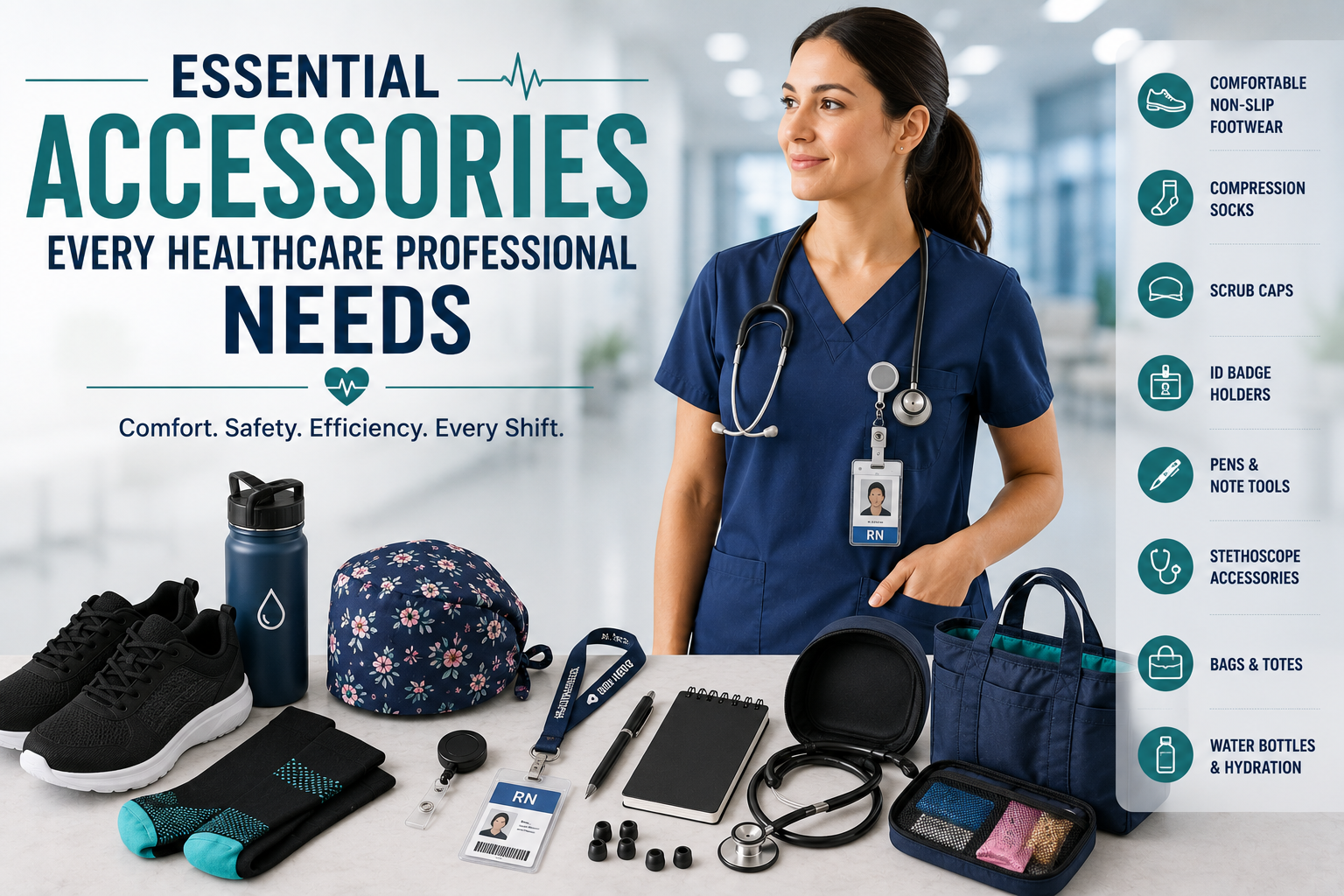
A well-fitted, high-quality scrub set is the foundation of a comfortable, practical uniform but it's rarely the whole picture. The right accessories can meaningfully improve comfort, efficiency, and confidence throughout a demanding shift, filling in the gaps that scrubs alone can't cover. This guide rounds up the accessories healthcare professionals most commonly rely on, and why each one earns its place in a well-prepared shift bag.
Footwear: Often the Most Underrated Comfort Investment
Many healthcare professionals focus heavily on scrub comfort while treating footwear as an afterthought, despite spending hours walking and standing during a typical shift.
Supportive, cushioned soles reduce strain on the feet, knees, and lower back over long periods of standing and walking.
Non-slip outsoles are essential for safety in clinical environments where spills, wet floors, and fast-paced movement are common.
Easy-clean materials matter given how frequently healthcare footwear needs to be wiped down or washed between shifts.
A proper fit, checked regularly feet can change slightly in size over time, and ill-fitting shoes are one of the most common causes of foot fatigue and discomfort reported by healthcare staff.
Many professionals find that upgrading footwear makes as noticeable a difference to overall shift comfort as upgrading scrub fabric itself, making it one of the highest-impact accessory investments available.
Compression Socks
Long shifts spent standing or walking put real strain on circulation, and compression socks have become a popular, practical solution among healthcare professionals.
Improved circulation during extended periods of standing can help reduce the heavy, tired feeling many professionals experience in their legs by the later hours of a shift.
Reduced swelling is commonly reported with regular use, particularly for those working consecutive long shifts.
A range of compression levels are available, so it's worth checking guidance on appropriate compression strength for general shift wear versus specific medical needs.
Compression socks are a low-cost, low-effort accessory that many professionals describe as making a genuine difference to how their legs feel by the end of a demanding day.
Scrub Caps
Whether required for theatre work or chosen for personal preference, scrub caps serve both a practical and personal-style purpose.
Hygiene and hair management Keeping hair contained and away from the face is essential in many clinical settings, particularly surgical or highly sterile environments.
Comfort during long wear A well-fitted cap made from breathable fabric avoids the discomfort of a tight, restrictive design worn for many consecutive hours.
Personal expression within uniform constraints Many healthcare professionals use scrub cap patterns or colours as one of the few opportunities for personal style within an otherwise standardised uniform.
ID Badge Holders and Lanyards
A secure, easily accessible ID badge is both a practical necessity and, in most healthcare settings, a uniform requirement.
Retractable badge reels allow quick access without needing to remove the badge entirely, useful for frequent scanning or identification checks throughout a shift.
Secure clip attachments reduce the risk of a badge falling off during fast movement or physical tasks.
Breakaway lanyards are often preferred for safety reasons, releasing under pressure to avoid any risk of strangulation or injury during physical patient contact.
Pens, Pen Loops, and Note-Taking Tools
Despite increasing digital documentation, pens remain a practical daily necessity for most healthcare roles.
A reliable pen loop or holder, whether built into a scrub pocket or added separately, prevents the common frustration of a pen going missing mid-shift.
A small notepad or pocket-sized notebook remains useful for quick notes that don't require immediate digital entry, particularly during fast-paced or high-pressure moments.
Stethoscope Accessories
For roles that require a stethoscope, a few accessories can improve both practicality and comfort.
A stethoscope holder or clip keeps it secure and accessible without needing to drape it uncomfortably around the neck for an entire shift.
Ear tip covers improve comfort during extended use and can be replaced individually rather than needing a full stethoscope replacement.
A carrying case, useful for protecting the equipment during transport to and from work.
Bags and Totes for Shift Essentials
Many healthcare professionals carry a small bag or tote specifically for shift essentials that don't fit in scrub pockets, particularly items needed for breaks or the commute to and from work.
A compact, easy-to-clean bag practical for carrying a water bottle, snacks, and personal items without adding bulk during the shift itself.
Separate compartments for clean and used items, such as a designated space for a spare scrub top in case of spills, keeps this system organised without cross-contaminating personal belongings.
Water Bottles and Hydration Accessories
Staying hydrated during a long, physically demanding shift is a simple but often overlooked priority.
A durable, easy-to-clean water bottle encourages more consistent hydration throughout a shift, particularly for professionals who don't always have easy access to a break room.
Insulated options keep water cool through a full 12-hour shift, which some professionals find helps encourage more frequent drinking compared to room-temperature water.
Compression or Support Base Layers
For colder wards or seasonal temperature changes, a well-chosen base layer adds warmth without restricting the mobility scrubs are designed to provide.
Moisture-wicking base layers avoid trapping sweat against the skin, even when adding an extra layer for warmth.
A slim, non-bulky fit ensures the base layer doesn't interfere with the fit or mobility of the scrub top worn over it.
Skincare and Hand Care Essentials
Frequent hand washing and sanitiser use, standard practice across healthcare roles, can take a real toll on skin over time.
A fragrance-free, clinically suitable hand cream helps manage the dryness that comes with frequent washing and sanitising, without interfering with hygiene protocols.
Lip balm and basic skincare items are small additions many professionals keep on hand, particularly during long shifts in dry, climate-controlled hospital environments.
Seasonal Accessory Adjustments
Beyond the core essentials, a few accessory choices shift depending on the time of year, particularly relevant for hospital environments where temperature control isn't always consistent across departments.
Winter and colder months A moisture-wicking thermal base layer becomes more of a priority, alongside slightly more durable footwear for wet commutes. Hand cream also becomes more important, since colder weather combined with frequent washing can worsen skin dryness.
Summer and warmer months Breathable, lightweight accessories take priority, including lighter-weight compression socks and a focus on hydration accessories, particularly for wards without strong air conditioning or during unusually warm periods.
Flu season and higher-risk periods Some professionals add extra hand care essentials and consider a higher rotation of scrub caps or accessories that can be washed more frequently without excessive wear, given the increased handwashing and sanitising typical during these periods.
Thinking about accessories seasonally, rather than as a fixed, static kit, helps ensure comfort and practicality hold up across the full range of conditions a healthcare role can involve throughout the year.
A Quick Reference: Accessories by Priority
|
Accessory |
Why It Matters |
Priority Level |
|
Supportive footwear |
Reduces fatigue, supports safety |
Essential |
|
Compression socks |
Supports circulation on long shifts |
Highly recommended |
|
ID badge holder/lanyard |
Uniform requirement, practical access |
Essential |
|
Scrub cap |
Hygiene, comfort, personal style |
Role-dependent |
|
Pen loop/notepad |
Quick documentation access |
Highly recommended |
|
Stethoscope accessories |
Comfort and equipment protection |
Role-dependent |
|
Shift bag |
Organisation for personal items |
Recommended |
|
Water bottle |
Hydration during long shifts |
Highly recommended |
|
Base layer |
Seasonal comfort and warmth |
Seasonal/role-dependent |
|
Hand care essentials |
Manages skin impact of frequent washing |
Recommended |
Building a Shift-Ready Kit Without Overcomplicating It
Not every accessory on this list is necessary for every role the right combination depends on your specific job, shift pattern, and personal preference. A practical starting point is to prioritise the accessories with the clearest, most consistent impact on comfort and function: supportive footwear, a reliable ID badge system, and hydration essentials, before expanding into more role-specific additions like stethoscope accessories or compression socks based on your particular working conditions.
Building this kit gradually, rather than trying to acquire everything at once, also makes it easier to judge which accessories genuinely improve your day-to-day comfort versus which ones sound useful but don't end up making much practical difference for your specific role.
Why ScrubNext Supports a Complete Shift Kit
While scrubs remain at the core of what we do, we understand that genuine shift comfort extends beyond the uniform itself. Choosing the right combination of scrubs and supporting accessories footwear, hydration, hygiene essentials, and practical storage creates a complete system built around the real demands of a healthcare shift, not just the uniform in isolation.
Frequently Asked Questions
What's the single most important accessory for healthcare professionals?
Supportive, well-fitted footwear is generally considered the highest-impact accessory, since it directly affects comfort and safety during long periods of standing and walking.
Are compression socks actually worth using for regular shifts?
Many healthcare professionals report reduced leg fatigue and swelling with regular use, particularly during long or consecutive shifts, making them a low-cost, low-effort addition worth trying.
Do I need a scrub cap if my role doesn't require one?
Not necessarily, though some professionals choose to wear one for hygiene or personal preference reasons even outside of mandatory theatre or surgical settings.
What should go in a healthcare professional's shift bag?
Common essentials include a water bottle, snacks, a spare scrub top in case of spills, and any personal items needed for breaks, ideally organised to keep clean and used items separate.
How can I manage dry skin from frequent hand washing?
A fragrance-free, clinically suitable hand cream used consistently between washes can help manage dryness without interfering with hygiene protocols required in most healthcare settings.
Final Thoughts
A truly comfortable, practical shift depends on more than scrubs alone. Footwear, hydration, hygiene essentials, and role-specific tools all contribute to how well-prepared and comfortable a healthcare professional feels throughout a demanding day. Building a considered accessory kit, tailored to your specific role and shift pattern, complements a well-fitted, high-quality scrub set to create a genuinely complete uniform system.
Explore ScrubNext's scrub collection and start building a shift kit designed for comfort, practicality, and every long day ahead.