Best Veterinary Scrubs for UK Professionals
2026-08-28 07:53:17
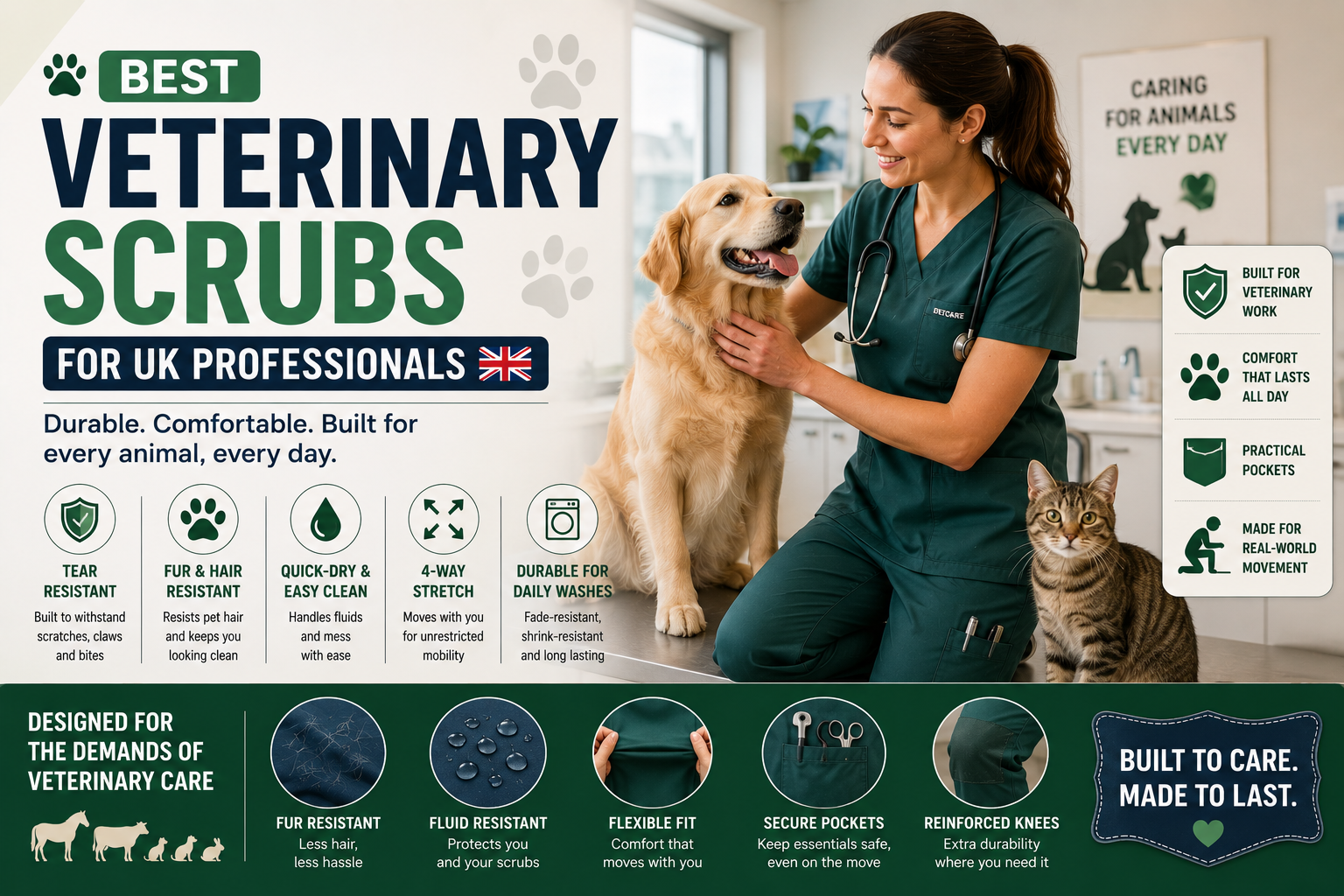
introduction
Veterinary work presents a genuinely different set of physical and practical challenges compared to human healthcare settings. Handling animals of vastly different sizes and temperaments, working in less predictable physical conditions, and dealing with fur, claws, and unexpected movement all shape what veterinary professionals need from their scrubs in ways that differ meaningfully from general medical uniform priorities. This guide covers exactly what to look for.
What Makes Veterinary Work Physically Different
Understanding the specific demands of veterinary practice explains why certain scrub features matter more here than in most human healthcare roles.
Unpredictable physical movement Animals don't follow instructions the way human patients generally do, meaning veterinary professionals often need to react quickly to sudden movement, requiring genuine flexibility and durability under unexpected strain.
Direct contact with claws, fur, and teeth Unlike most human healthcare settings, veterinary work carries a real risk of scrubs being scratched, snagged, or bitten during handling, procedures, or examinations.
Wide range of physical sizes and species From handling a small cat to restraining a large dog or livestock animal, the physical demands vary considerably depending on the specific case, requiring scrubs that perform well across very different physical situations.
Fur and hair exposure Veterinary scrubs are exposed to significant pet hair and fur throughout a typical day, making fabric that resists hair retention and cleans easily a genuinely practical priority.
Less predictable mess and fluids Veterinary work often involves a wider and less predictable range of fluids and mess compared to many human healthcare settings, making durable, easy-clean fabric particularly important.
What Veterinary Professionals Should Prioritise: Fabric
Tear Resistance
Given the genuine risk of scratches, snags, or bites during animal handling, tear-resistant fabric is a far more prominent priority in veterinary settings than in most human healthcare roles. Reinforced, durable weave structures help scrubs withstand this kind of physical stress without developing small tears that quickly worsen with repeated use.
Fur and Hair Resistance
Certain fabric finishes and weave types resist pet hair adhesion more effectively than others, making cleaning between patients faster and helping maintain a more professional appearance throughout a busy clinic day.
Quick-Drying, Easy-Clean Material
Given the less predictable range of fluids and mess involved in veterinary work, fabric that cleans easily and dries quickly supports both hygiene and practical turnaround between patients, particularly during busy clinic days with back-to-back appointments.
Durability Under Frequent, Demanding Washing
Veterinary scrubs often require more frequent and sometimes more intensive washing than general medical scrubs, given the nature of the work, making durable, shrink-resistant, fade-resistant fabric particularly important for maintaining a professional appearance over time.
Genuine Stretch for Unpredictable Movement
Unlike some patient-facing human healthcare roles where movement is relatively predictable, veterinary professionals often need to react suddenly to animal movement, making genuine four-way stretch fabric a meaningful practical priority rather than just a comfort feature.
What Veterinary Professionals Should Prioritise: Fit and Features
Practical, Secure Pockets
Veterinary professionals often carry a range of tools throughout a shift, making secure, well-placed pockets genuinely useful, particularly ones that won't easily spill contents during sudden movement while handling an animal.
A Fit That Supports Crouching and Kneeling
Much of veterinary work involves getting down to an animal's level, whether crouching, kneeling, or sitting on the floor during an examination or procedure. A fit that remains comfortable and functional in these positions, not just standing or walking, is a specific consideration worth prioritising.
Reinforced Knees
Given how frequently veterinary professionals kneel or crouch during examinations, reinforced knee areas can meaningfully extend a scrub's lifespan compared to standard construction not designed with this movement in mind.
A Practical, Non-Restrictive Silhouette
While professional appearance still matters in veterinary settings, particularly for client-facing consultations, the physical unpredictability of the work generally shifts priority somewhat more toward practical mobility than the more purely polished aesthetic that patient-facing human healthcare roles sometimes prioritise.
Fabric Comparison for Veterinary Work
|
Fabric Type |
Suitability for Veterinary Professionals |
|
Cotton |
Breathable, but less tear-resistant and prone to fur retention |
|
Polyester |
Durable and easy-clean, resists fur better than cotton |
|
Polyester-Spandex Blend |
Strong balance of durability, stretch, and fur resistance |
|
Performance Fabric |
Best overall for durability, stretch, and easy cleaning |
For a full breakdown of fabric types generally, see our scrub fabric comparison guide.
Colour Considerations for Veterinary Practices
Veterinary practices generally have more flexibility around scrub colour than many NHS or human healthcare settings, since there's no equivalent standardised national policy.
Practical, darker colours such as navy or charcoal tend to be popular for their ability to disguise pet hair and minor staining more effectively than lighter shades.
Practice-branded colours are common, particularly among larger veterinary groups building a consistent visual identity across multiple clinic locations.
Lighter colours are less commonly favoured in veterinary settings specifically due to how visibly they show fur and general mess compared to darker alternatives.
Sizing Considerations for Veterinary Professionals
Given the physically unpredictable, often floor-level nature of veterinary work, sizing priorities differ somewhat from more consistently upright clinical roles.
-
Prioritise genuine stretch and room for crouching or kneeling, rather than a closely tailored fit that might restrict these movements
-
Consider reinforced-knee styles if available, given how frequently veterinary work involves floor-level positioning
-
Check pocket security carefully, since sudden animal movement can more easily dislodge poorly secured pocket contents than in most human healthcare settings
For full measurement guidance, see our complete scrub sizing guide.
Small Animal vs Large Animal Practice: Do Needs Differ?
Veterinary work covers a genuinely wide range of settings, and scrub priorities can shift depending on the specific type of practice.
Small animal practices (cats, dogs, small pets) typically involve more consistent indoor conditions, frequent handling of animals at table height, and a stronger emphasis on fur resistance given the high frequency of close animal contact throughout a typical day.
Large animal and mixed practices (livestock, equine work) often involve outdoor or farm conditions, more physically demanding restraint situations, and greater exposure to dirt, mud, and general outdoor mess, making durability and easy-clean fabric even more of a priority than in a purely small-animal clinical setting.
Exotic and specialist practices may involve more delicate, precise handling for smaller or more fragile animals, shifting priorities slightly back toward the fine motor control and precision-focused comfort more common in general clinical settings, while still retaining the tear-resistance needs relevant across veterinary work broadly.
Considering which category best matches your specific practice helps fine-tune which features durability, fur resistance, or precision comfort deserve the most weight in your decision.
Common Mistakes Veterinary Professionals Make When Buying Scrubs
Choosing standard medical scrubs without checking tear resistance Scrubs designed primarily for human healthcare settings don't always account for the physical demands specific to animal handling, making tear resistance a feature worth checking specifically rather than assuming.
Overlooking fur and hair resistance Fabric choice significantly affects how much time is spent removing pet hair between patients, making this a practical, time-saving consideration beyond simple comfort.
Prioritising light colours While personal preference matters, lighter colours generally show fur and mess more readily, which many veterinary professionals find impractical for daily clinical use.
Underestimating the need for stretch and mobility Given how much veterinary work involves crouching, kneeling, and reacting to sudden animal movement, choosing scrubs without genuine stretch can meaningfully limit practical comfort and function.
Why ScrubNext Works Well for Veterinary Professionals
ScrubNext's scrub range suits the specific physical demands of veterinary practice:
-
Durable, tear-resistant fabric built to withstand handling-related wear
-
Genuine four-way stretch supporting crouching, kneeling, and sudden movement
-
Easy-clean, quick-drying material practical for busy clinic days
-
Fade and shrink-resistant construction suited to frequent, demanding washing
-
A practical colour range, including darker shades well-suited to disguising fur and minor staining
Frequently Asked Questions
Do veterinary professionals need different scrubs than human healthcare workers?
In several practical ways, yes. Veterinary scrubs benefit more from tear resistance, fur and hair resistance, and genuine stretch for unpredictable movement compared to the priorities typical in most human healthcare roles.
What's the most practical scrub colour for veterinary work?
Darker colours like navy or charcoal are generally more practical, since they disguise pet hair and minor staining more effectively than lighter shades.
Is stretch fabric important for veterinary scrubs?
Yes, genuinely so. Veterinary work often involves sudden, unpredictable movement while handling animals, making four-way stretch a practical necessity rather than just a comfort feature.
Do veterinary scrubs need to be more durable than standard medical scrubs?
Generally yes, given the real risk of scratches, snags, or bites during animal handling, along with more frequent and sometimes more demanding washing requirements.
Should veterinary scrubs have reinforced knees?
This can be a genuinely useful feature, given how frequently veterinary work involves crouching or kneeling during examinations and procedures.
Final Thoughts
Veterinary work brings a distinct set of physical demands unpredictable animal movement, direct contact with fur and claws, and frequent floor-level positioning all of which shape what veterinary professionals genuinely need from their scrubs. Prioritising tear-resistant, fur-resistant fabric, genuine stretch, and a fit that supports crouching and kneeling addresses these specific demands more effectively than simply choosing scrubs designed for general human healthcare settings.
Explore ScrubNext's scrub collection for veterinary professionals and find fabric and fit built for the unique demands of animal care.