Best Scrubs for Nurses Working 12-Hour Shifts
2026-08-11 10:24:05
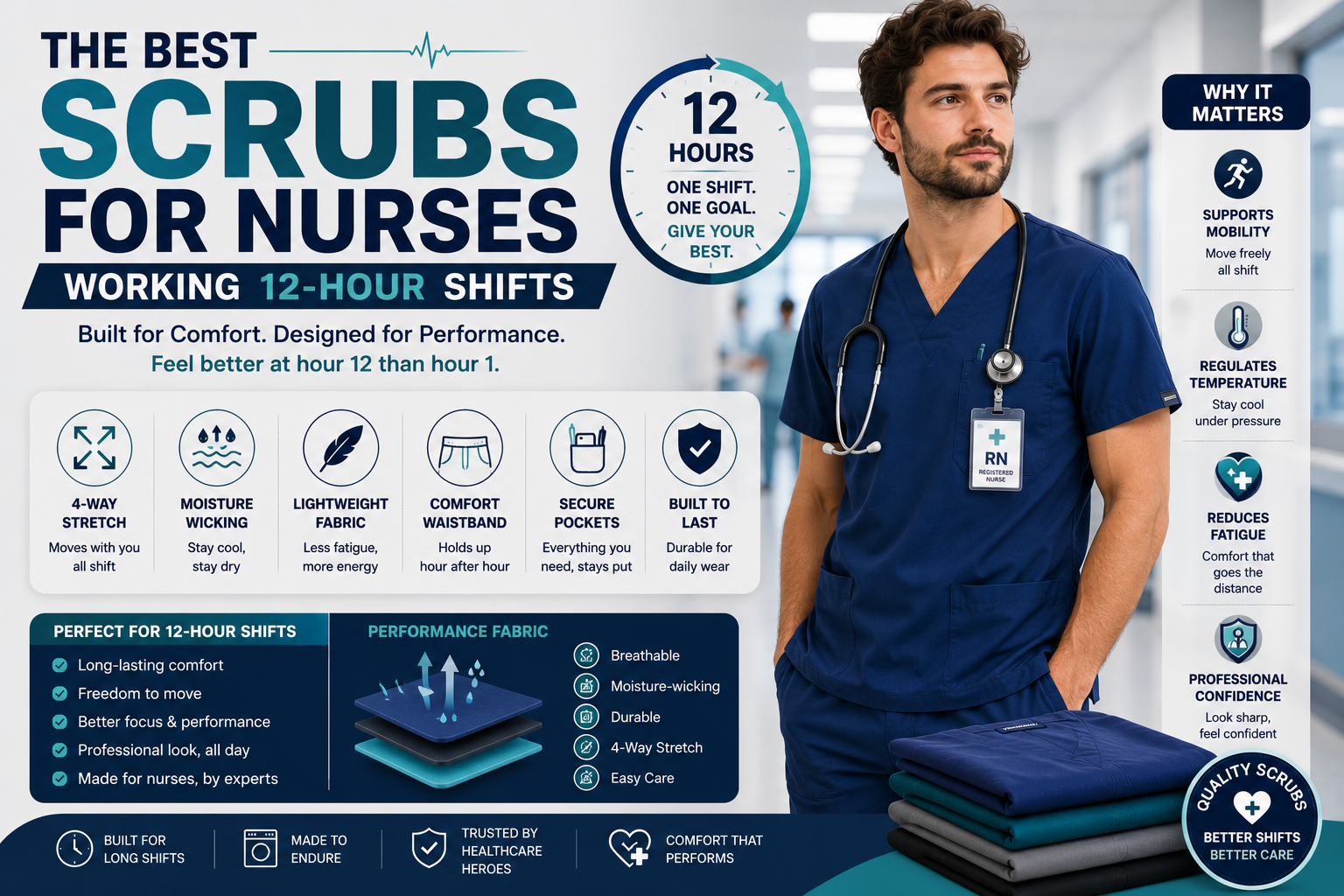
Introduction
A 12-hour shift is a different physical challenge to a standard 8-hour working day, and the scrubs that feel fine for a short shift don't always hold up across a full 12. This isn't a general buying guide for that, see our complete guide to choosing nursing scrubs and our breakdown of why comfortable scrubs improve performance. Instead, this article focuses specifically on what changes when your shift stretches to 12 hours, and exactly what to prioritise so you feel as good at hour eleven as you did at hour one.
What Changes Over the Course of a 12-Hour Shift
Comfort issues that are barely noticeable in a short shift tend to compound significantly over 12 hours. Understanding how a typical long shift unfolds physically helps explain why certain scrub features matter more the longer you're on your feet.
Hours 1-3 Fresh, high energy. Fit and initial comfort matter most here; anything too tight or restrictive becomes obvious quickly.
Hours 4-6 Fatigue starts building. Fabric that traps heat or doesn't move well starts to feel noticeably more restrictive than it did at the start.
Hours 7-9 This is typically where comfort issues become significant. Waistbands that lacked proper elasticity start slipping, breathability issues lead to overheating, and any chafing from earlier in the shift becomes uncomfortable.
Hours 10-12 Physical and mental fatigue peak. Lightweight, well-fitted, breathable scrubs make a genuine difference here, while restrictive or heavy fabric adds to an already demanding final stretch.
This progression is exactly why scrubs that feel adequate for a quick shift can feel genuinely uncomfortable by the end of a 12-hour one the fabric and fit issues don't change, but their impact accumulates.
The Non-Negotiables for 12-Hour Shift Scrubs
Based on this hour-by-hour breakdown, a few features move from "nice to have" to essential once shifts stretch to 12 hours.
Genuine Four-Way Stretch
Not marketing-label "stretch" actual spandex or elastane content that allows movement in every direction. Over 12 hours of bending, reaching, and fast movement, fabric without real stretch becomes a constant source of minor resistance that adds up to real fatigue.
Moisture-Wicking, Breathable Fabric
Twelve hours gives heat and moisture far more time to build up than a shorter shift, particularly under PPE. Fabric that actively pulls moisture away from the skin, rather than simply being lightweight, makes a noticeably bigger difference over a full 12-hour rotation than it would over a 6-hour one.
A Waistband That Holds Up
Elastic waistbands under strain for 12 straight hours need genuine quality to avoid slipping or digging in by the later hours. This is one of the most commonly reported comfort complaints specifically tied to shift length rather than scrub quality in general.
Lightweight Fabric Weight
Fabric weight that feels negligible for a few hours becomes noticeably more tiring to wear across 12 hours of constant movement. This is why many nurses on regular long shifts specifically favour lighter performance fabrics over heavier cotton or standard polyester blends.
Secure, Well-Placed Pockets
Twelve hours means more opportunities for a poorly secured phone pocket or loose pen holder to become a genuine annoyance, particularly during fast-paced or physically active stretches of a shift.
A Complete 12-Hour Shift Comfort Checklist
Scrubs are the foundation, but a full 12-hour shift is more comfortable when the rest of your kit supports the same goal.
✔ Scrub top and trousers with genuine four-way stretch and moisture-wicking fabric
✔ A second base layer option for wards with inconsistent temperature control, especially for night shifts
✔ Supportive, non-slip footwear often reported as making as much difference to fatigue as the scrubs themselves
✔ Compression socks to support circulation during long periods of standing and walking
✔ A well-fitted scrub cap if required for your role, chosen for comfort over a full shift rather than just appearance
✔ A spare set for back-to-back shifts, since 12-hour rotations often leave little time for laundry between shifts
✔ A secure phone pocket or lanyard, reducing the small daily friction of managing devices and ID during a busy shift
Fabric Comparison Specifically for 12-Hour Wear
|
Fabric Type |
How It Performs Over 12 Hours |
|
Pure Cotton |
Breathable early on, but wrinkles and loses shape noticeably by hour 8-10 |
|
Standard Polyester |
Holds shape well but can feel warm and less comfortable by the later hours |
|
Polyester-Spandex Blend |
Strong balance of stretch and durability; performs consistently through most of a 12-hour shift |
|
Performance Fabric |
Best overall performance across a full 12-hour shift, combining stretch, breathability, and lightweight construction |
For a deeper breakdown of how each fabric type performs generally, see our full scrub fabric comparison guide.
Tips for Staying Comfortable Through a Full 12-Hour Shift
Choose one size looser rather than tighter if you're between sizes. Over 12 hours, a slightly looser fit with good stretch tends to feel more comfortable than a snug fit that restricts movement by the later hours.
Rotate your scrub sets rather than relying on one or two. Fabric that hasn't fully recovered its stretch and shape between washes performs less well on a long shift, so having enough sets in rotation helps each one perform at its best.
Wash new scrubs before wearing them on a long shift for the first time. This softens fabric slightly and removes any stiffness that can become noticeable over many hours of wear.
Pair scrubs with proper footwear and compression socks. Much of the reported fatigue from 12-hour shifts comes from the legs and feet rather than the uniform itself, so addressing both together produces the best overall comfort.
Keep a spare top on hand for particularly physical shifts. For roles with a higher risk of spills or heavy activity, having a backup top readily available avoids finishing a shift in a genuinely uncomfortable, damp uniform.
Day Shift vs Night Shift: Does It Change What You Need?
Twelve-hour shifts aren't all identical, and day shifts versus night shifts can create slightly different comfort priorities worth factoring in.
Day shifts often involve warmer ward conditions, more visitor and family interaction, and generally higher overall activity levels across departments. Breathability and a polished, wrinkle-resistant appearance tend to matter more here, since day shifts typically involve more direct patient and family contact throughout.
Night shifts often run in quieter, sometimes cooler ward environments, with different energy demands across the shift. Many night-shift nurses find that a slightly heavier or warmer base layer, paired with breathable scrubs, strikes the right balance, since hospital temperature control can vary more noticeably overnight. Wrinkle resistance also matters here, since there's typically even less time to prepare a fresh uniform between consecutive night shifts.
Neither pattern requires a completely different scrub set, but it's worth considering when deciding on base layers, fabric weight, and how many sets to keep in rotation if your role regularly involves one pattern over the other.
Common Mistakes When Choosing Scrubs for Long Shifts
Assuming any "stretch" scrub will perform the same over 12 hours Minimal, single-direction stretch fabric behaves very differently from genuine four-way stretch once fatigue sets in during the later hours of a shift.
Underestimating fabric weight A scrub that feels fine when tried on briefly can feel noticeably heavier after ten hours of continuous movement, so it's worth considering lightweight construction even if it's not obvious in the first few minutes of wear.
Not accounting for waistband quality Many nurses focus on the fabric of the top and trousers while overlooking waistband construction, despite it being one of the most common comfort complaints specifically tied to shift length.
Relying on a single scrub set for back-to-back long shifts Without adequate recovery time between washes, fabric doesn't fully regain its shape and stretch, meaning a single set performs progressively worse across consecutive 12-hour shifts.
Why Performance Fabric Is Often Worth It Specifically for 12-Hour Shifts
While the case for performance fabric applies across most healthcare roles, it becomes particularly strong for anyone working regular 12-hour shifts. The combination of stretch, breathability, and lightweight construction addresses exactly the comfort issues that compound most over a longer shift meaning the upgrade from basic cotton or polyester tends to be most noticeable for exactly this group of professionals, more so than for shorter or less physically demanding roles.
Why ScrubNext Scrubs Are Suited to 12-Hour Shifts
ScrubNext scrub sets are built with long shifts specifically in mind, combining the features that matter most across a full 12-hour rotation:
-
Four-way stretch performance fabric that holds up through hours of movement
-
Breathable, moisture-wicking material to manage heat and moisture over a full shift
-
Durable, well-fitted waistbands designed to stay comfortable through extended wear
-
Lightweight construction that reduces cumulative fatigue
-
Secure, practical pockets built for fast-paced, active shifts
Frequently Asked Questions
What's the Most Important Scrub Feature for 12-Hour Shifts?
Genuine four-way stretch fabric tends to make the biggest difference during a 12-hour shift. Restrictive fabric can become increasingly uncomfortable and contribute to fatigue over a long working day, making flexible, comfortable scrubs particularly valuable for extended shifts.
Do I Need Different Scrubs for 12-Hour Shifts Compared to 8-Hour Shifts?
Not necessarily. You don't need a completely different type of scrub for longer shifts, but features such as performance fabric, genuine stretch, and a well-fitted waistband become more important as shift length increases. Choosing scrubs designed for movement and all-day comfort can make a noticeable difference.
How Many Scrub Sets Do I Need If I Work 12-Hour Shifts Back-to-Back?
Most nurses working regular 12-hour shifts can benefit from having five or more scrub sets. Having several sets available reduces the pressure to do laundry between back-to-back shifts and ensures you always have a clean, comfortable uniform ready for work.
Does Footwear Matter as Much as Scrubs for 12-Hour Shift Comfort?
Yes. Footwear plays a major role in overall comfort during long shifts. Supportive, comfortable, and non-slip shoes can complement well-designed scrubs and help reduce the discomfort associated with spending many hours standing and walking.
Is Performance Fabric Worth the Extra Cost for 12-Hour Shifts?
For nurses who regularly work long shifts, performance fabric can be worth the additional investment. Compared with basic cotton or polyester fabrics, quality performance materials can provide better stretch, breathability, moisture management, and ease of movement, making them particularly useful for demanding 12-hour shifts.
Final Thoughts
Twelve-hour shifts place different demands on scrubs than shorter working days, and the comfort issues that matter most tend to compound the longer a shift runs. Prioritising genuine four-way stretch, breathable performance fabric, a reliable waistband, and lightweight construction addresses exactly the problems that show up most in the later hours of a long shift.
Paired with supportive footwear and a well-planned rotation of sets, the right scrubs can make a meaningful difference to how you feel by the end of hour twelve, not just how you look at the start.
Shop ScrubNext scrubs built for long shifts and find performance fabric designed to hold up hour after hour.