Best Medical Scrubs for Dentists in the UK
2026-08-21 08:15:51
Introduction
Dentistry involves a distinct set of physical demands compared to many other healthcare roles extended periods of precise upper-body movement, close working proximity to patients, frequent PPE use, and long stretches standing over a treatment chair. These specific demands shape what dentists genuinely need from their scrubs, which differs in meaningful ways from the priorities of more constantly mobile roles like nursing. This guide covers exactly what to look for.
The Specific Physical Demands of Dental Work
Understanding a dentist's typical working day helps explain which scrub features matter most for this particular role.
Extended fine motor work Much of a dentist's day involves precise, controlled hand and arm movement during procedures, requiring scrubs that don't restrict shoulder or arm mobility even during small, repeated movements.
Prolonged standing or leaning postures Dentists frequently stand or lean over a treatment chair for extended periods, often maintaining awkward postures for the duration of a procedure.
Close patient proximity Unlike some clinical roles with more physical distance from patients, dentistry involves close, sustained proximity, making PPE compatibility and a clean, professional appearance particularly important.
Frequent PPE layering Dental work typically involves gloves, masks, and often additional protective eyewear or face shields, all layered over scrubs for extended periods during procedures.
Precision-focused, lower-intensity movement Unlike the fast-paced, high-mobility demands of nursing or emergency care, dental work tends to involve controlled, lower-intensity movement, shifting the comfort priorities somewhat differently.
What Dentists Should Prioritise: Fabric
Breathability Under PPE
Given how frequently dentists work under masks, gloves, and sometimes face shields, breathable fabric becomes particularly important for managing heat and comfort during extended procedures, even though the overall physical activity level may be lower than more mobile clinical roles.
Moderate Stretch for Shoulder and Arm Mobility
While dentists don't need the same degree of four-way stretch as highly active roles, scrubs that allow unrestricted shoulder and arm movement support the precise, controlled motions dental procedures require, particularly around the upper body and shoulders.
Soft-Touch, Comfortable Fabric
Since dentists often maintain close, sustained proximity to patients, fabric that feels soft and comfortable rather than stiff or rough contributes to a more polished, professional patient experience alongside personal comfort.
Easy-Care, Stain-Resistant Fabric
Dental work carries a genuine risk of minor splashes or spatter during certain procedures, making fabric that resists staining and cleans easily a practical priority, alongside the fade and shrink resistance relevant across most clinical roles.
What Dentists Should Prioritise: Fit
Freedom of Movement Through the Shoulders and Upper Arms
Since much of the physical demand in dentistry centres on the upper body rather than full-body movement, a fit that allows genuinely unrestricted shoulder and arm mobility matters more here than trouser-focused features like jogger-style cuffs or cargo pockets.
Comfort During Extended Leaning or Standing Postures
A fit that remains comfortable during sustained, sometimes awkward postures rather than just standing upright or walking is a specific consideration for dental work, particularly around the shoulders and lower back area of the scrub top.
A Clean, Professional Silhouette
Given the close patient proximity typical in dental settings, many dentists favour a slightly more tailored, polished appearance, similar to the preferences often seen among doctors in patient-facing consultation roles.
What Dentists Should Prioritise: Practical Features
Minimal, Well-Placed Pockets
Dental work typically requires less on-the-body storage than nursing or emergency roles, since most tools remain within the treatment area rather than carried on the person. A cleaner, less bulky pocket layout is often preferred over heavy cargo-style storage.
Compatibility with Additional PPE
Scrubs that fit well under or alongside additional PPE gowns, aprons, or extra protective layers used during certain procedures avoid the discomfort of excess bulk or restricted movement when PPE is added on top of the standard uniform.
Colour Coordination with Practice Branding
Many dental practices, particularly private clinics, use scrub colour as part of their broader visual branding and patient experience, an area covered in more detail in our guide to scrub colour meaning.
Fabric Comparison for Dental Work
|
Fabric Type |
Suitability for Dentists |
|
Cotton |
Soft and breathable, suited to lower-intensity days, though wrinkles more easily |
|
Polyester |
Durable and stain-resistant, practical for frequent washing |
|
Polyester-Spandex Blend |
Good shoulder mobility with added durability |
|
Performance Fabric |
Best overall balance of breathability, mobility, and stain resistance |
For a full breakdown of fabric types generally, see our scrub fabric comparison guide.
Colour Choices Common in Dental Practice
Colour policy in dental settings varies considerably, particularly between NHS dental services and private practices, which often have more flexibility.
Burgundy has become increasingly popular in private dental and cosmetic clinics, often associated with a modern, premium patient experience.
Navy and ceil blue remain common, particularly in NHS dental services or practices favouring a more traditional clinical aesthetic.
Practice-specific branded colours are increasingly common among private dental groups building a consistent visual identity across multiple locations.
Always confirm your specific practice's uniform policy before ordering, particularly for NHS dental roles where colour requirements may be more standardised.
Sizing Considerations for Dentists
Since dental work centres heavily on upper-body movement rather than full-body activity, sizing priorities differ somewhat from more active roles.
-
Prioritise shoulder and arm room over trouser mobility features, since dentists generally don't need the same lower-body flexibility that nursing or physiotherapy roles require
-
Consider a slightly more tailored fit through the torso, supporting the polished, patient-facing appearance many dental practices favour
-
Check sleeve length carefully, since dentists' arm positioning during procedures can make an ill-fitting sleeve more noticeable than in roles with more varied movement
For full measurement guidance, see our complete scrub sizing guide.
Common Mistakes Dentists Make When Buying Scrubs
Prioritising trouser mobility features unnecessarily Jogger-style cuffs or heavy cargo pockets, while popular in more active roles, often add little practical benefit for dental work and can be deprioritised in favour of upper-body comfort features.
Overlooking PPE compatibility Choosing scrubs without considering how they'll fit alongside additional gowns or protective layers can lead to discomfort or restricted movement during procedures.
Ignoring stain resistance Given the genuine risk of minor splashes during certain procedures, choosing fabric without stain-resistant properties can shorten how long a scrub set looks presentable between washes.
Underestimating the value of soft-touch fabric Given close, sustained patient proximity, fabric comfort affects the overall patient experience, not just the dentist's personal comfort, making this a more prominent consideration than in less patient-adjacent roles.
Dentists vs Dental Hygienists and Nurses: Do Needs Differ?
Within a dental practice, different roles have slightly different physical demands worth considering separately.
Dentists typically spend the most time in fixed, precision-focused postures during procedures, making shoulder and arm mobility, along with comfort during sustained leaning positions, the top priority.
Dental hygienists often move between multiple patients and treatment areas more frequently within a single day, benefiting from a slightly more mobile fit than a dentist performing longer, single-patient procedures, while still prioritising many of the same upper-body comfort features.
Dental nurses, who provide chairside support and handle more frequent movement between instruments, trays, and assisting tasks, often benefit from features closer to general nursing priorities practical pockets and slightly more overall mobility compared to the more stationary, precision-focused role of the dentist themselves.
Recognising these differences within a single practice can help when choosing scrubs for an entire dental team, rather than assuming one uniform specification suits every role equally well.
Why ScrubNext Works Well for Dental Professionals
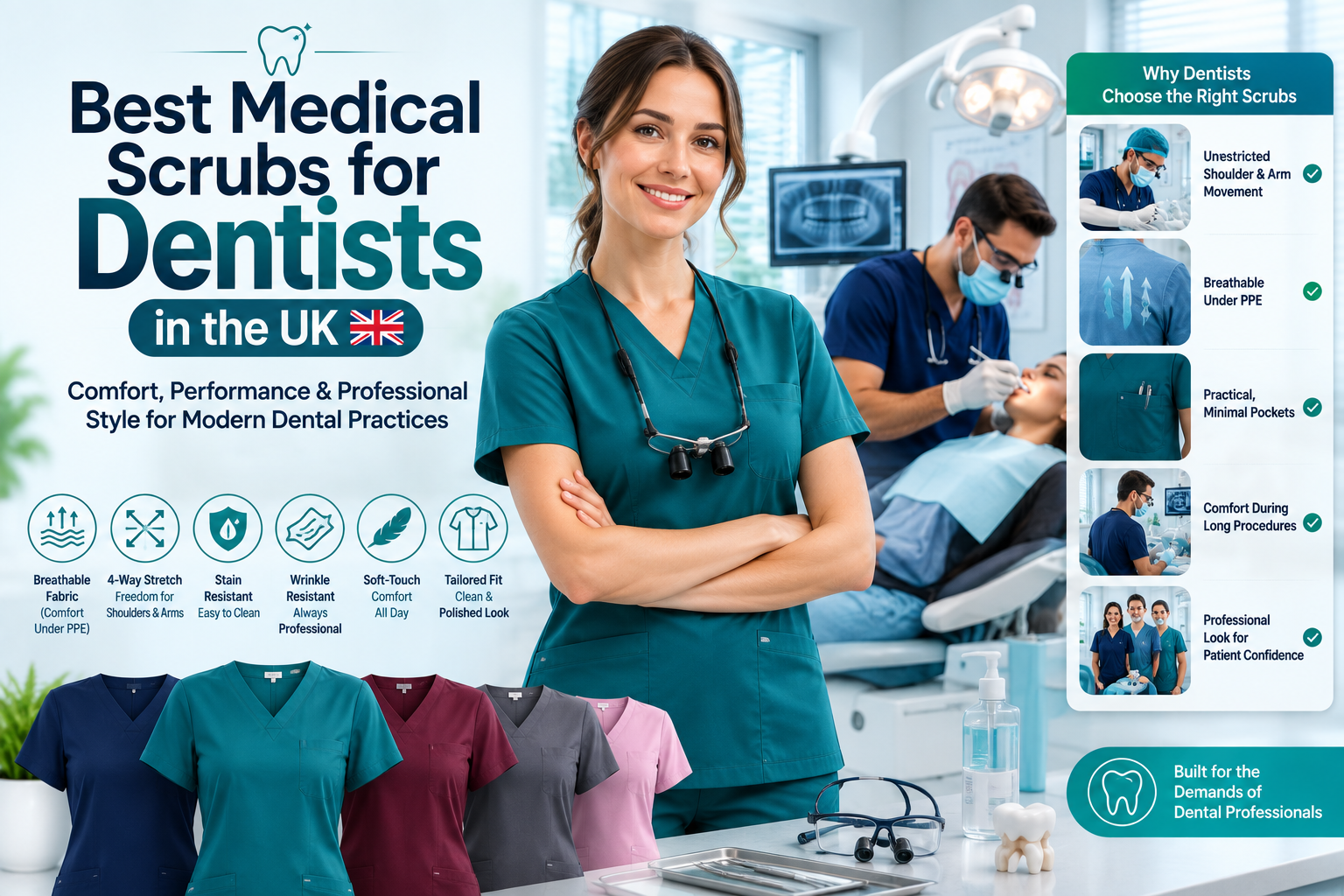
ScrubNext's scrub range suits the specific demands of dental practice, combining comfort, mobility, and professional polish:
-
Breathable, soft-touch fabric suited to extended PPE use
-
Moderate stretch supporting unrestricted shoulder and arm movement
-
Stain-resistant, easy-care fabric practical for frequent washing
-
A tailored, professional fit suited to close patient proximity
-
A colour range including burgundy and other popular dental practice shades
Frequently Asked Questions
Do dentists need the same scrub features as nurses?
Not entirely. While comfort and durability matter for both, dentists typically prioritise shoulder and arm mobility, stain resistance, and a polished appearance over the trouser-focused, high-mobility features nursing roles often need.
What colour scrubs do dentists typically wear in the UK?
This varies by practice. NHS dental services often favour traditional colours like navy or ceil blue, while private practices increasingly choose burgundy or practice-branded colours for a more premium patient experience.
Is stain resistance important for dental scrubs?
Yes, given the genuine risk of minor splashes during certain procedures, stain-resistant fabric helps maintain a professional appearance between washes more effectively than standard fabric.
Do dentists need stretch fabric in their scrubs?
Moderate stretch, particularly through the shoulders and upper arms, supports the precise movement dental procedures require, though dentists generally don't need the same degree of four-way stretch as more physically active clinical roles.
Should dental scrubs fit differently than nursing scrubs?
Yes, to some extent. Dental scrubs benefit more from upper-body mobility and a tailored, professional silhouette, while nursing scrubs often prioritise full-body stretch and practical trouser features suited to constant movement.
Final Thoughts
Dental work brings a distinct combination of precise upper-body movement, close patient proximity, and frequent PPE use, all of which shape what dentists genuinely need from their scrubs. Prioritising breathable, soft-touch fabric, unrestricted shoulder mobility, and stain resistance addresses the specific demands of dental practice more effectively than simply choosing scrubs designed for more physically active clinical roles.
Explore ScrubNext's scrub collection for dental professionals and find fabric and fit built for precision work and long clinical days.