Best Medical Scrub Fabrics Explained: Cotton vs Polyester vs Stretch
2026-08-11 10:09:46
Introduction
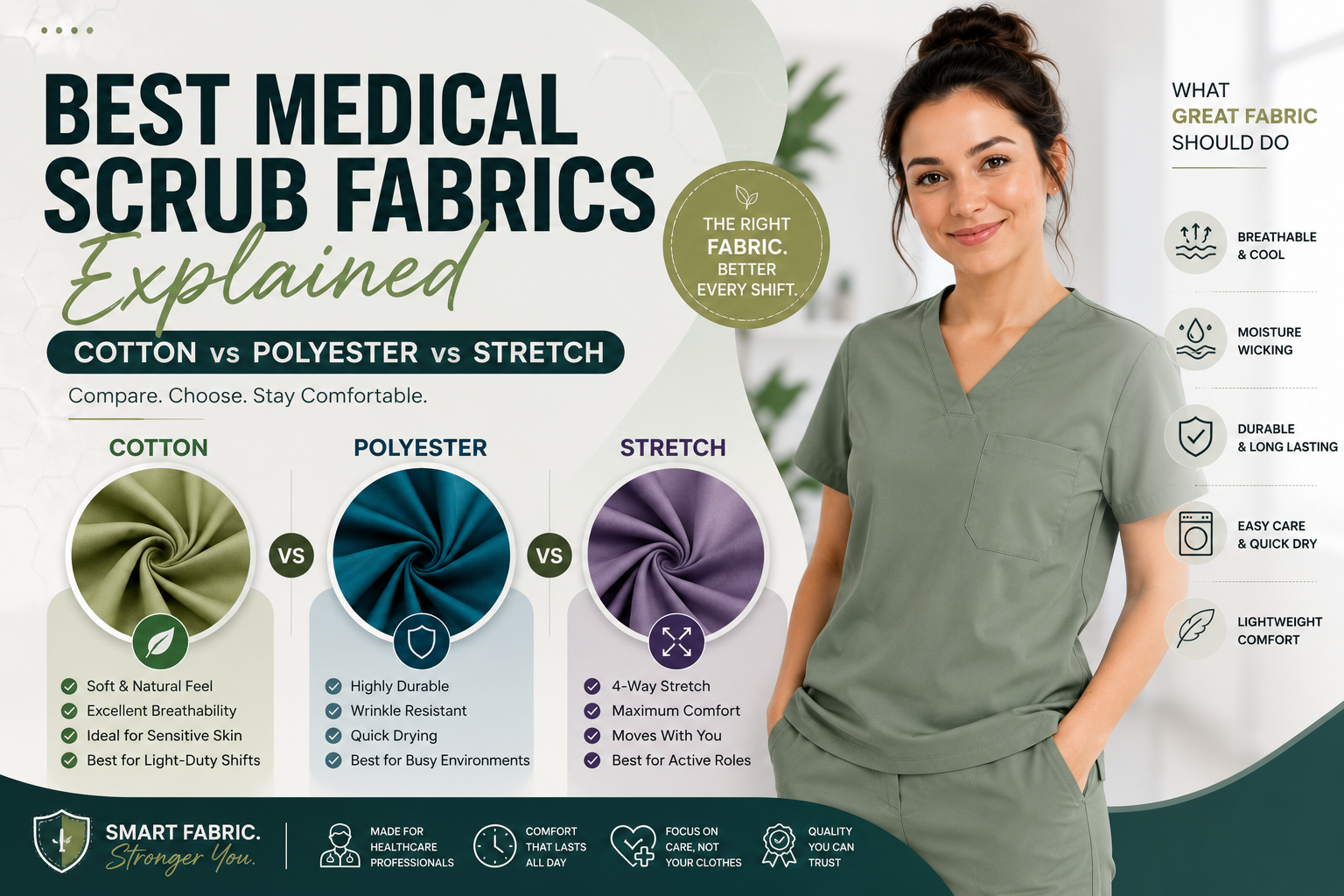
Fabric is the single biggest factor in how a medical scrub performs more than colour, style, or even fit. Two scrub sets can look almost identical on a hanger, yet feel completely different after eight hours on your feet, or after twenty washes in an industrial machine.
Most scrub fabric falls into one of three categories: cotton, polyester, or stretch blends (usually polyester or cotton combined with spandex or elastane). Each has genuine strengths and trade offs depending on your role, shift length, and how much movement your job demands. This guide breaks down exactly how each fabric performs, so you can choose scrubs based on how you actually work not just how a product photo looks.
Why Fabric Matters More Than Most People Realise
Healthcare professionals wash their scrubs far more often than ordinary clothing, often after every single shift. They also wear them through extended periods of walking, bending, lifting, and sometimes under additional PPE layers. This combination of frequent washing and high physical demand makes fabric choice far more important than it would be for everyday workwear.
The wrong fabric doesn't just feel uncomfortable it can also wear out faster, lose shape after a handful of washes, or trap heat during long shifts, all of which affect how you perform and feel throughout the day.
Cotton Scrubs: The Traditional Choice
Cotton has been used in medical uniforms for decades, and it remains popular for good reason.
Advantages of Cotton
Excellent breathability Cotton allows air to circulate more freely than most synthetic fabrics, which helps regulate body temperature during a shift.
Soft, natural feel Many people find cotton more comfortable against the skin than synthetic alternatives, especially for those with sensitive skin.
Lightweight Pure cotton scrubs tend to feel light, which some professionals prefer for shorter or less physically intense shifts.
Natural fibre appeal Some healthcare professionals prefer natural fibres over synthetic blends for personal or environmental reasons.
Drawbacks of Cotton
Limited stretch Pure cotton has little to no natural stretch, which can feel restrictive during bending, reaching, or fast movement.
Wrinkles easily Cotton creases quickly, both during wear and after washing, meaning more ironing or a less polished appearance by the end of a shift.
Shrinks more than synthetic blends Cotton is more prone to shrinking after repeated washing, particularly with high heat drying.
Slower drying time Compared to polyester, cotton takes longer to dry, which can be inconvenient for professionals who need to wash and rewear scrubs quickly between shifts.
Best For
Cotton scrubs tend to suit shorter shifts, general ward work, clinics, GP surgeries, and care home settings where breathability matters more than intense stretch or movement. It's a solid, comfortable option for roles that don't involve constant bending, lifting, or fast paced physical activity.
Polyester Scrubs: Built for Durability
Polyester has become one of the most widely used fabrics in modern healthcare uniforms, largely because of how well it holds up to frequent washing and daily wear.
Advantages of Polyester
Excellent durability Polyester resists wear, tearing, and general breakdown far better than cotton, making it ideal for scrubs washed after every shift.
Strong colour retention Polyester holds dye more effectively, meaning colours like navy or black stay vibrant for longer instead of fading unevenly.
Wrinkle resistant Polyester naturally resists creasing, so scrubs look neater with little to no ironing required.
Quick drying Polyester dries significantly faster than cotton, which is useful for professionals who need to turn around laundry quickly.
Shrink resistant Polyester holds its shape and size far more reliably through repeated industrial washing.
Drawbacks of Polyester
Less breathable than cotton On its own, polyester doesn't allow air to circulate as freely, which can lead to overheating during long or physically demanding shifts.
Can feel less soft Some professionals find pure polyester less comfortable against the skin compared to cotton or blended fabrics.
Limited natural stretch Like cotton, polyester alone doesn't offer much flexibility unless blended with elastane or spandex.
Best For
Polyester scrubs work well for busy hospital environments, roles involving frequent washing, and professionals who prioritise a low maintenance uniform that holds its shape and colour over many wash cycles.
Stretch Scrubs: Built for Movement
Stretch scrubs aren't a single fabric type on their own they're typically cotton or polyester blended with spandex or elastane to add flexibility. This category has grown significantly in popularity as healthcare professionals increasingly prioritise mobility.
Advantages of Stretch Fabric
Four way flexibility Genuine stretch blends move with the body in every direction, making bending, reaching, crouching, and lifting far more comfortable.
Reduced fatigue Fabric that moves with you, rather than against you, reduces the physical strain of repetitive movement across a long shift.
Modern, tailored fit Stretch fabric holds a tailored shape better than rigid fabric, allowing for slimmer, more contemporary scrub designs without sacrificing comfort.
Comfortable for active roles Nurses, physiotherapists, emergency staff, and veterinary professionals often notice the biggest difference when switching to stretch fabric.
Drawbacks of Stretch Fabric
Can be more expensive Performance stretch blends typically cost more than basic cotton or polyester due to the added fibre and manufacturing process.
Quality varies significantly between brands Not all "stretch" scrubs contain genuine four way stretch fibres; some only offer minimal give in one direction, so it's worth checking the fabric composition rather than relying on marketing language.
May require slightly more careful washing Elastane fibres can degrade faster under high heat, so stretch fabric often benefits from lower temperature washing and drying.
Best For
Stretch scrubs are the strongest choice for nurses, A&E and emergency staff, physiotherapists, and any role involving frequent bending, lifting, or fast movement throughout a shift.
Side by Side Fabric Comparison
|
Feature |
Cotton |
Polyester |
Stretch Blend (Poly/Cotton + Spandex) |
|
Breathability |
Excellent |
Moderate |
Good |
|
Stretch/Flexibility |
Low |
Low |
Excellent |
|
Durability |
Moderate |
Excellent |
Good to Excellent |
|
Wrinkle Resistance |
Poor |
Excellent |
Good |
|
Shrink Resistance |
Poor |
Excellent |
Good |
|
Drying Time |
Slow |
Fast |
Moderate |
|
Cost |
Low Moderate |
Moderate |
Moderate High |
|
Best For |
Short shifts, general wards |
Busy hospitals, low maintenance wear |
Active roles, 12 hour shifts |
Performance Fabric: The Best of All Three
Many premium scrub ranges now use performance fabric an engineered blend that combines the breathability of cotton, the durability of polyester, and the flexibility of a stretch blend into one material, often with additional moisture wicking and odour resistant treatments built in.
This type of fabric tends to suit healthcare professionals who don't want to compromise between comfort, durability, and mobility, particularly for demanding roles or long shifts where every one of these qualities matters. It's typically the most expensive option upfront, but often proves the most cost effective over time due to how well it holds up to frequent washing and daily wear.
How to Choose the Right Fabric for Your Role
Rather than choosing a fabric based on price or appearance alone, it helps to think about the specific demands of your day to day work.
If your shifts are shorter and less physically demanding such as GP surgeries, pharmacies, or administrative clinical roles a cotton or cotton blend scrub often provides enough comfort and breathability without the added cost of a performance fabric.
If you need a low maintenance uniform that holds up to frequent washing such as busy hospital environments with strict laundering schedules polyester's durability and wrinkle resistance make it a practical, reliable choice.
If your role involves constant movement, bending, or lifting such as nursing, physiotherapy, emergency care, or veterinary work a stretch or performance fabric blend will likely make the biggest difference to your comfort across a full shift.
If you want the best possible combination of all three qualities and are willing to invest a bit more upfront, performance fabric is generally worth the cost, particularly for anyone working 12 hour shifts regularly.
Common Fabric Myths Worth Clearing Up
"All stretch fabric is the same." Not true genuine four way stretch requires spandex or elastane content. Some scrubs marketed as "stretch" only offer minimal give in a single direction, so it's worth checking the fabric composition listed on the product page.
"Cotton is always more breathable than any blend." While pure cotton is highly breathable, many modern performance fabrics are engineered specifically to match or exceed cotton's breathability while adding stretch and durability so this isn't always a straightforward trade off anymore.
"Polyester scrubs are uncomfortable." This was more true of older, basic polyester fabrics. Modern polyester blends, especially those combined with cotton or spandex, are significantly softer and more comfortable than older generations of the material.
How to Care for Each Fabric Type
Even the best fabric performs poorly if it isn't washed correctly. Care requirements differ slightly between fabric types, so it's worth adjusting your routine depending on what your scrubs are made from.
Cotton Wash in cool to warm water rather than hot, since heat accelerates shrinking. Air dry where possible, or use a low tumble dry setting to help preserve shape and reduce excessive wrinkling.
Polyester Generally more forgiving with washing temperature, though avoiding excessive heat still helps maintain colour vibrancy over time. Polyester dries quickly, so a low or medium tumble dry setting is usually sufficient.
Stretch blends (spandex/elastane) Wash in cooler water and avoid high heat when drying, since elastane fibres break down faster under prolonged heat exposure. Air drying is generally the safest option for preserving stretch and shape over the long term.
Performance fabric Follow the specific care label closely, since these engineered blends often combine multiple fibre types with different heat sensitivities. Most perform best with cooler washes and lower heat drying, despite being marketed as low maintenance.
Getting the wash routine right for your specific fabric type can meaningfully extend how long your scrubs maintain their fit, colour, and comfort regardless of which fabric category you choose.
Frequently Asked Questions
Which fabric is best for 12 hour hospital shifts?
A polyester spandex blend or dedicated performance fabric is usually best, offering the durability of polyester with the flexibility and breathability needed for long, active shifts.
Is cotton or polyester better for sensitive skin?
Cotton is generally considered gentler on sensitive skin due to its natural fibre content, though many modern cotton polyester blends also perform well for this.
Do stretch scrubs shrink like cotton scrubs?
Genuine stretch blends with polyester as a base tend to shrink less than pure cotton, though elastane content can degrade with high heat, so following care instructions is important for longevity.
What fabric lasts the longest with frequent washing?
Polyester and polyester based performance blends generally outlast pure cotton, thanks to stronger resistance to shrinking, fading, and general wear.
Is performance fabric worth the extra cost?
For most healthcare professionals working regular or long shifts, yes performance fabric combines the strengths of cotton, polyester, and stretch blends, often making it more cost effective over time despite a higher upfront price.
Final Thoughts
There's no single "best" scrub fabric for everyone the right choice depends on your role, shift length, and how much movement your job demands. Cotton offers breathability and softness for lighter duty roles, polyester delivers durability and low maintenance for busy environments, and stretch blends provide the flexibility active healthcare professionals need most.
For many nurses and clinical staff working demanding, physical shifts, a performance fabric blend that combines all three strengths tends to offer the best long term value and comfort.
Browse ScrubNext's performance fabric scrub collection and find the right material for your role, shift length, and comfort needs.